How do you permanently remove damp and mould stains from a wall?
Wiping mould off is not enough: unless you cut the moisture source and use a fungicidal primer, the stain returns within months.
Short answer
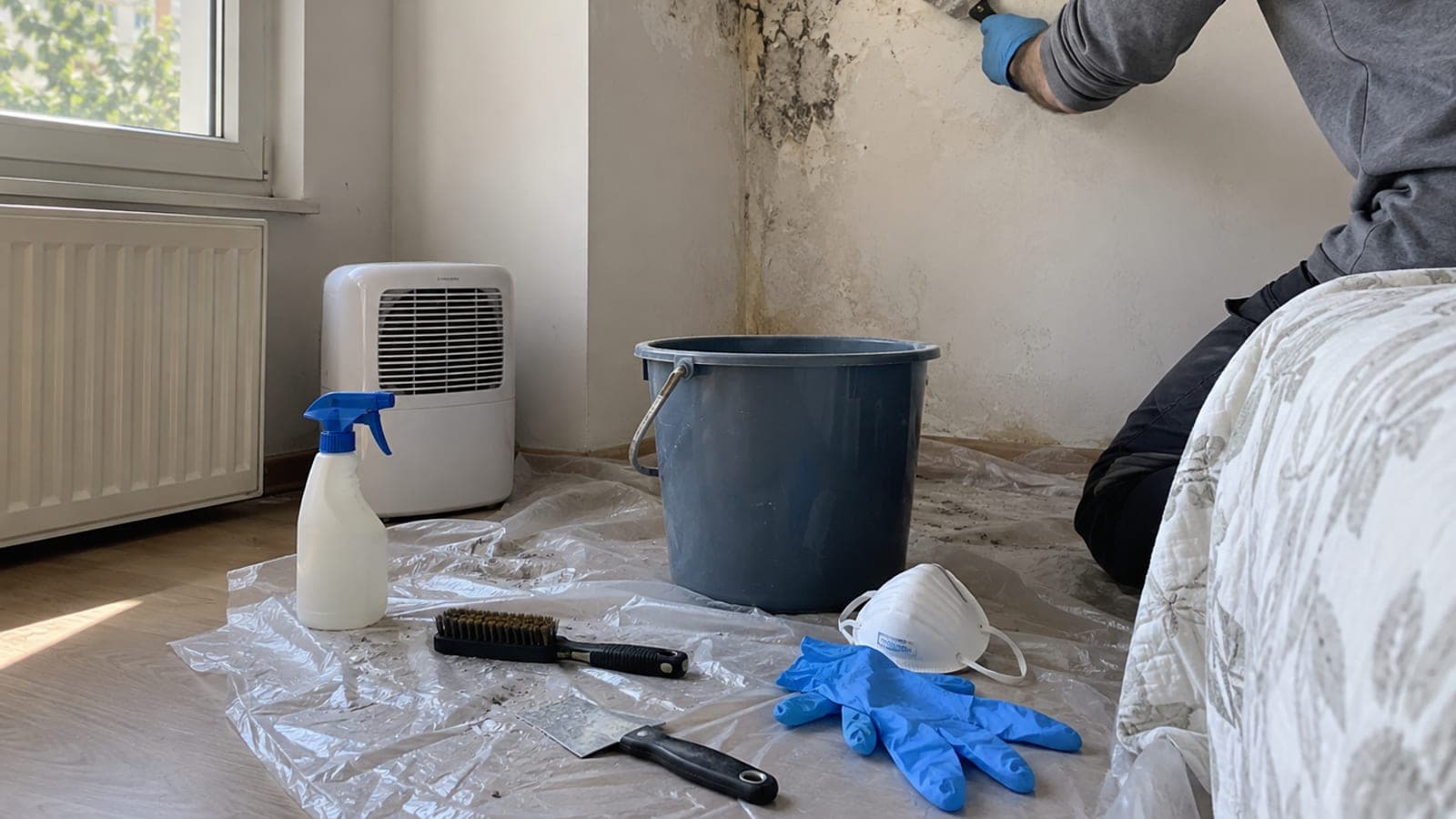
Cut the moisture source first: a plumbing leak, roof or exterior wall seepage, or condensation. Wet the mouldy surface with 1 part bleach to 4 parts water, leave 20 minutes, scrape off blistered paint and loose plaster back to sound substrate, then dry the wall for 48-72 hours. Apply 1 coat of fungicidal primer and 2 coats of anti-microbial interior paint. Keep room humidity at 40-60%.
What you need
Step by step
Find the moisture source
No treatment lasts until you know the cause. Hold the meter within 10 cm of the stain: room humidity above 65% points to condensation, a stain behind a bathroom or kitchen wall to a plumbing leak, one on an outside wall or ceiling joint to roof or facade seepage. Watch the water meter for 2 hours with all taps off; if the dial moves, call a plumber first.
Clear the room and protect yourself
Mould spores irritate the airways. Pull furniture away from the wall, cover the floor with sheeting, and mask off skirting boards and socket edges. Wear an FFP2 mask, nitrile gloves and goggles, open the window and shut the room door so spores do not spread through the house.
Kill the mould
Dilute 1 part bleach with 4 parts water in a spray bottle, or use a ready-made mould killer straight from the pack. Wet the surface, leave it 15-20 minutes, wipe with a damp cloth and let it dry again. Never scrub the dry surface with a brush; that throws spores into the air.
Scrape off blistered paint and plaster
Use a scraper to remove blistered paint, powdery plaster skim and loose render back to sound substrate. Go at least 5 cm beyond the visible stain in every direction, because mould spreads unseen under the paint film. Then level the surface with 80 grit paper and vacuum the dust away.
Dry the wall completely
Put a dehumidifier or absorber tubs in the room, aim a fan at the wall and run both for 48-72 hours. Do not apply any filler or paint until the meter reads below 12% wall moisture. Paint over a wet wall will blister again within 2-3 months.
Repair the surface and seal it
Fill the scraped area with filler or ready-mixed repair plaster, let it cure 6-8 hours and flatten it with 120 grit paper. Where the damp comes from outside, brush on one coat of damp-proof or waterproofing primer and respect the waiting time on the tin, usually 4-6 hours.
Apply fungicidal primer and paint
Roll or brush on one coat of fungicidal primer and leave it 4-6 hours to dry. Follow with 2 coats of anti-microbial interior paint, waiting at least 4 hours between coats. Paint the whole wall corner to corner rather than touching up the stained patch, so the colour matches.
Stop it coming back
Twice a day, open opposite windows for 10 minutes to create cross ventilation, and run the bathroom extractor for 15 minutes after showering. Keep furniture at least 5 cm off external walls and do not dry laundry indoors. Leave the hygrometer in the room and hold humidity between 40 and 60%.
Tips
Watch out
Never mix bleach with hydrochloric acid, vinegar, ammonia or another cleaner; the chlorine gas released can cause poisoning in a closed room. If the affected area is bigger than 3 square metres, has spread onto the ceiling, or someone in the home has asthma, is a baby or is immunocompromised, hire a specialist instead of doing it yourself.
Frequently asked questions
+Isn't painting over the mould stain enough?
No. Paint applied while the moisture source is active hides the mould but does not starve it; the stain usually blisters through in the same spot within 2-4 months.
+Does bleach kill mould permanently?
It kills surface mould and lightens the stain, but it does not clear roots that have soaked into the plaster. Scraping, drying and fungicidal priming are essential for a lasting result.
+How long does the wall take to dry?
For surface damp from condensation, 48-72 hours with a dehumidifier is usually enough. Thick plaster soaked by a leak can take 2-3 weeks; let the moisture meter decide.
+I'm a tenant, who should pay?
Mould caused by structural issues such as seepage or missing insulation is the landlord's responsibility. Report it in writing with photos; surface mould from poor ventilation falls under the tenant's routine care duty.
+What if the musty smell stays after painting?
A lingering smell means mould is still active behind the wall, under the skirting or in the floor structure. Remove the skirting to check, and call a specialist for a moisture survey if needed.
Sources and verification
Last verified: September 15, 2026. tell us.
This content is for information only; for official procedures the relevant institution’s current announcements take precedence. Details: disclaimer.