How do you unclog a sink without chemicals?
Clear a blocked sink in 30-40 minutes using baking soda, hot water, a rubber plunger and a trap cleanout, with zero chemicals.
Short answer
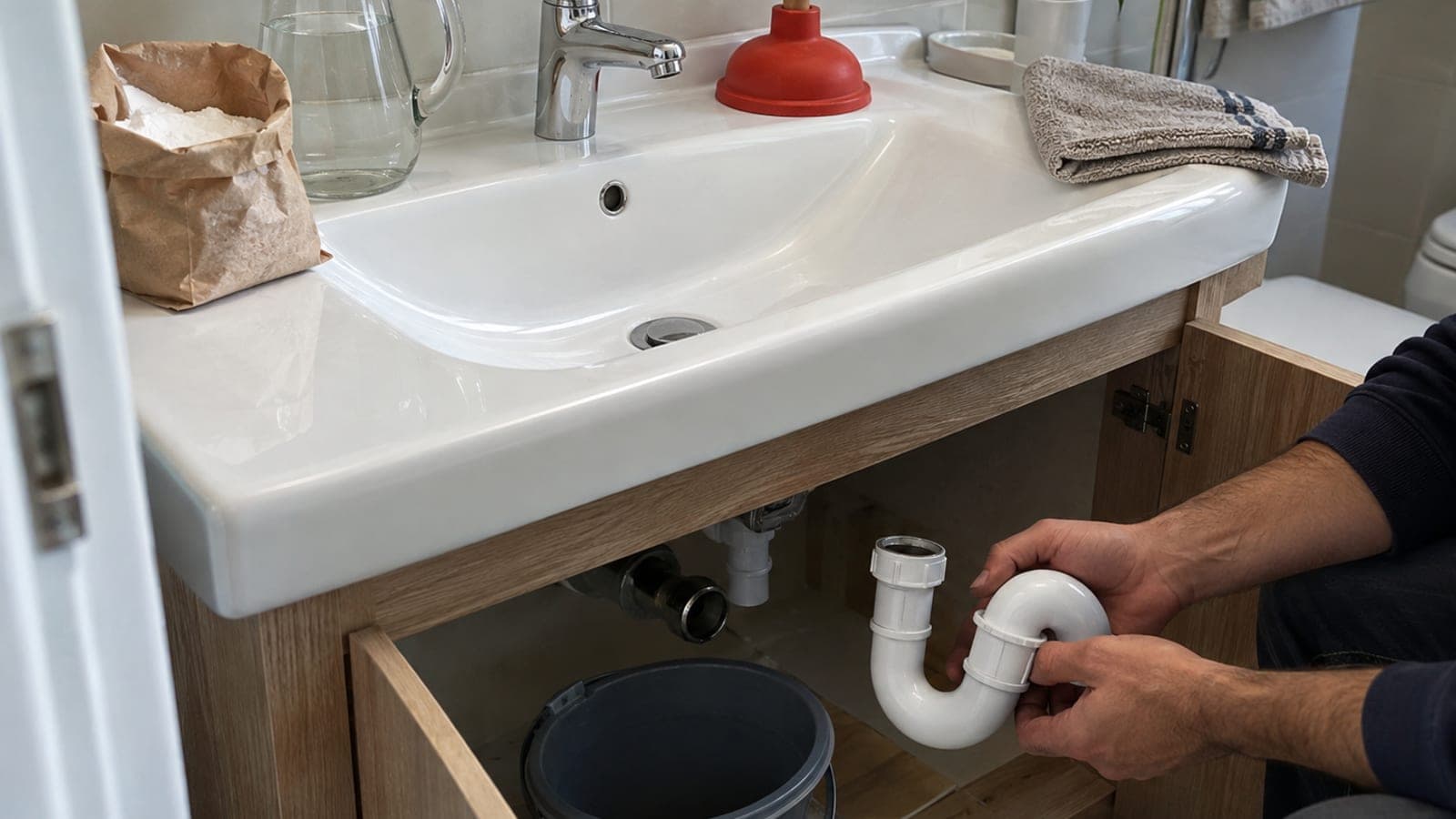
Pull the strainer and remove the hair-and-grease plug. Pour 200 g baking soda down the drain, add 200 ml white vinegar, cover the opening with a wet cloth and wait 20 minutes. Flush with 3-4 litres of 60-70 °C water in a thin stream. Still slow? Block the overflow hole and plunge hard for 15-20 seconds. If nothing changes, put a bucket under the cabinet and open the U-bend trap to clean it out.
What you need
Step by step
Remove the strainer and pull the plug out
Turn the drain strainer counter-clockwise and lift it out, then pull the hair, soap and grease clump underneath with a gloved hand or tweezers. Most blockages sit in the first 10 centimetres, so this step alone often restores flow. Throw the clump in the bin, never back down the drain.
Bail out the standing water
Scoop the water sitting in the basin out with a cup or small bucket, then wipe the remaining moisture with a rag. The basin needs to be empty, because baking soda dissolves instantly in standing water and loses its effect before it ever reaches the blockage.
Pour in baking soda and vinegar
Send 200 g of baking soda straight down the drain opening, then pour 200 ml of white vinegar over it slowly. Once it starts foaming, cover the opening with a wet cloth to push the pressure downward and wait 20 minutes. Grease and soap residue loosen during this time.
Flush with hot water
Heat 3-4 litres of water to 60-70 °C and pour it down the drain in a thin stream, in three or four batches. Never use boiling water on plastic (PVC) traps; the joints loosen and the gasket deforms. On a metal trap, boiling water causes no problem.
Apply pressure with the plunger
Seal the overflow hole near the top of the basin tightly with a wet cloth, then add enough water to cover the plunger bell. Seat the plunger squarely over the drain and push and pull with fast, vertical strokes for 15-20 seconds. Repeat the cycle three times.
Hook the hair clog out with an auger
Feed the drain auger, or a coat hanger with the last 2 cm bent into a hook, into the drain and push it 40-60 cm in. When you feel resistance, do not force it forward; twist clockwise and pull back toward yourself to drag the clump out.
Open and clean the trap
If the flow is still blocked, place a bucket under the cabinet and loosen the plastic nuts on the U-bend trap counter-clockwise by hand. Take the bend off, scrape the sludge out with an old rag and wash it in hot soapy water. Seat the gasket properly, hand-tighten the nuts, then run water for 5 minutes and check for leaks.
Tips
Watch out
If anyone has already poured hydrochloric acid, caustic soda or a commercial drain opener down this drain, do not attempt baking soda and vinegar, plunging or opening the trap: chemical splashed back under pressure burns eyes and skin. Flush with plenty of water for at least 10 minutes first. Also, mixing bleach with vinegar releases toxic chlorine gas.
Frequently asked questions
+Do baking soda and vinegar actually work?
They are effective at loosening grease, soap and light organic residue. They will not dissolve a hair clump wedged in the pipe or a solid object; that calls for a plunger or an auger.
+Does boiling water damage pipes?
On PVC traps and plastic fittings, water above 70 °C can loosen the gasket and cause leaks. Keep the water between 60-70 °C on plastic plumbing and save boiling water for metal traps.
+When should I call a plumber?
If there is still no flow after cleaning the trap, if water backs up out of the drain, or if neighbours on the same stack are blocked too, the problem is in the main line and the building management should call a plumber.
+Can I use a vacuum cleaner instead of a plunger?
Only on wet-dry models, using suction mode. Pulling water into a standard dry vacuum burns out the motor and carries a real risk of electric shock.
+What if the clog comes back every couple of days?
That points to a bad pipe slope or a thick layer of limescale and grease along the line. Instead of spot fixes, have the line cleaned with a high-pressure water jetting machine.
Sources and verification
Published: September 12, 2026. tell us. Adapted from a Turkish source; metric units and Celsius kept as in the original.
This content is for information only; for official procedures the relevant institution’s current announcements take precedence. Details: disclaimer.