How do you clean scorch marks off an iron's soleplate?
Lift melted fabric, starch buildup and brown scorch off your iron with baking soda, vinegar and the Self Clean button.
Short answer
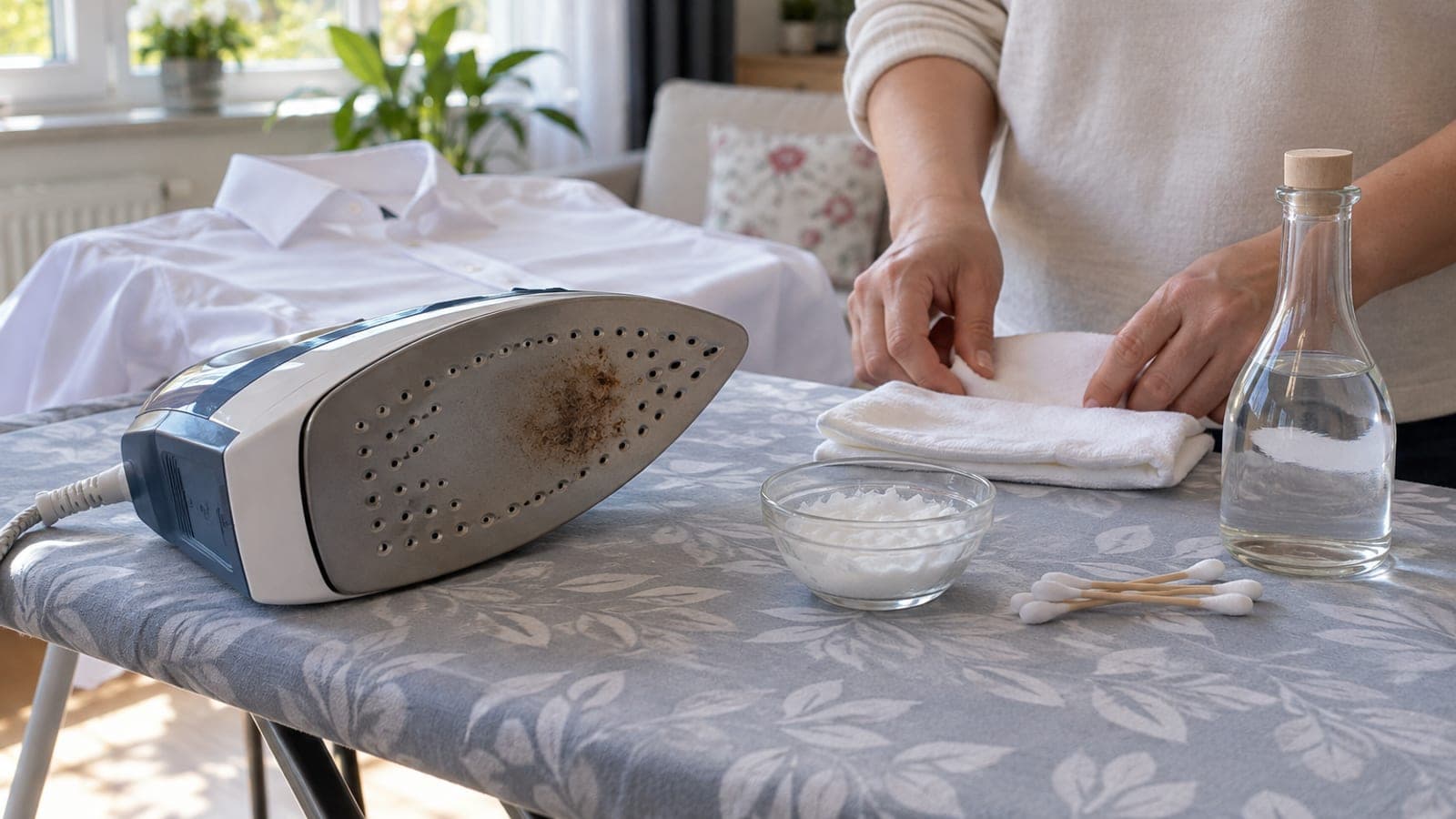
Unplug the iron and let it cool completely. Mix 1 tablespoon of baking soda with 1 teaspoon of water into a paste, rub it over the marks with a cotton cloth in circles, then wipe clean with a damp cloth. For melted synthetics, heat the plate to the ••• setting, unplug, and rub it across a thick cotton towel. Finish by filling the tank and holding Self Clean, then test-iron on an old towel.
What you need
Step by step
Unplug and let it cool
Pull the plug, empty the water tank and wait at least 30 minutes for the soleplate to cool fully. Putting a wet cloth or vinegar on a hot plate causes steam bursts and risks electric shock. A cold plate also lets you see exactly where the residue ends.
Scrape off loose residue
Lift blistered bits of melted polyester, nylon or label adhesive with the edge of a wooden or plastic spatula, working in one direction. Never use a metal knife, razor blade or steel wool: they permanently scratch nonstick and ceramic coatings, and the iron starts snagging on fabric.
Rub with baking soda paste
Stir 1 tablespoon of baking soda into 1 teaspoon of water until it has the texture of toothpaste. Spread it on the scorch mark, rub with a cotton cloth in circles for 2-3 minutes, then wipe the whole plate with a cloth dipped in vinegar and dry it. Baking soda is a mild abrasive that will not scratch the coating.
Try the hot plate and vinegar trick
For stubborn brown scorch, set the dial to ••• (cotton), switch the steam off, then unplug the iron. Spread a thick cotton cloth soaked in white vinegar and wrung out on the counter and rub the iron back and forth over it for 20-30 seconds. Flip the cloth and repeat; the residue transfers to the fabric.
Clear the steam vents
Run a cotton swab dipped in vinegar around each steam hole one at a time. Loosen white limescale and burnt residue in blocked holes with the tip of a toothpick, never a metal needle. Residue left around a vent will melt again later and stain fabric.
Run the Self Clean cycle
Fill the tank to the MAX line with distilled water, plug the iron in and set the temperature to MAX. When the ready light goes out, hold the iron flat over the sink, press and hold the Self Clean button (labelled Calc Clean or Anti-Calc on some models) and shake it for 30-60 seconds. Scale and residue flush out.
Polish on salted newspaper
Sprinkle 1 tablespoon of coarse salt over a sheet of newspaper and glide the iron over it at the ••• setting with steam off for 30 seconds. This lifts the last micro-residue and leaves the plate glossy. Wipe the soleplate with a damp cloth afterwards and dry it.
Test-iron, then stand it upright
Dampen an old white towel and iron it while pressing Steam Boost three or four times, checking that no brown marks appear on the towel. If it comes out clean, empty the tank, stand the iron on its heel to cool and coil the cord loosely.
Tips
Watch out
Never use steel wool, bleach, oven cleaner or acetone on the soleplate; they permanently ruin nonstick and ceramic coatings, void the warranty, and leave the iron sticking to every fabric. Applying liquid while the iron is plugged in risks electric shock, so always unplug it first.
Frequently asked questions
+A plastic bag melted onto my iron. What now?
Heat the plate to the ••• setting, unplug it, and rub the residue off on a thick cotton cloth while it is still soft. Once cool, work any remaining mark with baking soda paste.
+My iron has no Self Clean button. How do I remove limescale?
Fill the tank with a half water, half white vinegar mix, set it to MAX and steam over an old cloth for 5 minutes. Then empty it and repeat with plain water to clear the vinegar smell.
+Brown water comes out of the steam vents. Is the iron broken?
Usually not: it is limescale and burnt residue building up inside. Clean water returns after a Self Clean or vinegar rinse; if it persists after two attempts, have it serviced.
+Will baking soda damage a ceramic soleplate?
Diluted baking soda paste applied with a soft cloth is safe on ceramic and nonstick plates. Do not scrub with dry powder under pressure, as it can leave micro-scratches.
+The iron still marks fabric after cleaning. What should I do?
Residue may still sit in the vents. Press Steam Boost five or six times over an old wet towel to flush it, and if marks continue, swab the vents with vinegar again.
Sources and verification
Published: September 12, 2026. tell us.
This content is for information only; for official procedures the relevant institution’s current announcements take precedence. Details: disclaimer.