How do you remove an iron scorch mark from fabric?
Lift yellowed or shiny iron marks at home with hydrogen peroxide, white vinegar and steam, step by step.
Short answer
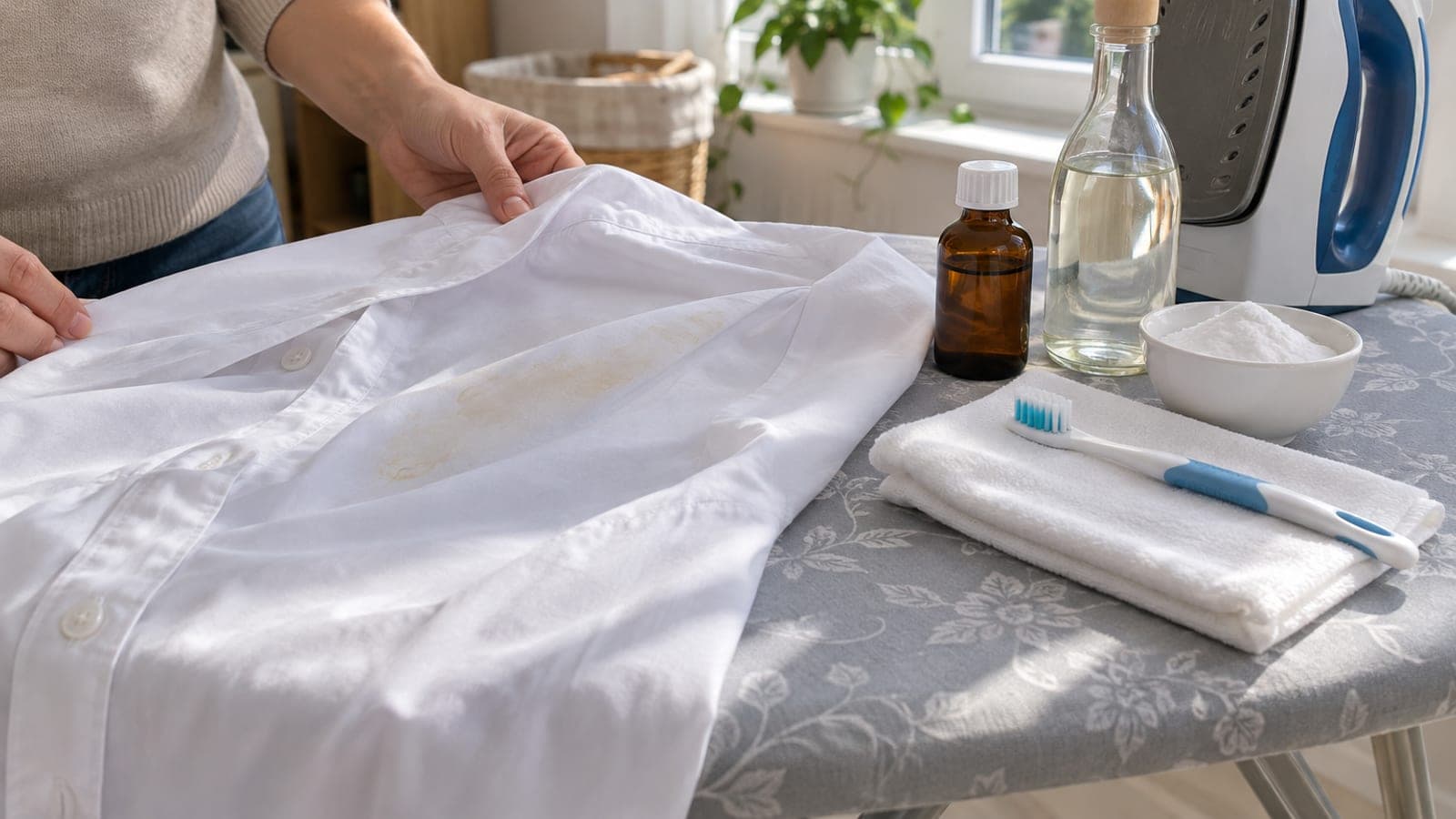
Dampen the mark with cold water. On white fabric, blot 3% hydrogen peroxide in with a white cloth and leave it 20 minutes; on colours use 1 part white vinegar to 1 part water. Then wash at 30C with an oxygen-based stain remover. If only shine remains, turn the garment inside out and steam-press through a damp cloth. Brown, hardened marks where the fibre has charred will not come out.
What you need
Step by step
Identify the type of mark
Hold the fabric up to window light. A pale yellow shadow or light shine sits on the surface and will come out. A dark brown patch that feels hard and rough, where the fibres have melted, is charred and will not lift; that needs a patch or cover-up. Misjudging this leads to pointless scrubbing that thins the cloth.
Brush off the loose fibres
Lay the fabric flat with a folded white towel underneath. Brush the mark gently in one direction with a soft toothbrush for 20-30 seconds. Some of the singed fuzz and residue transferred from the soleplate comes away at this stage.
Wet with cold water and pre-treat
Dampen the mark with cold water only; heat sets the yellowing. Add 2-3 drops of clear liquid dish soap, spread it with your fingertip in small circles and leave it 10 minutes. Rinse with cold water afterwards.
Apply hydrogen peroxide on white fabric
On white or very pale fabric, blot 3% hydrogen peroxide into the mark with a white cloth rather than rubbing. Leave it 20-30 minutes, re-wetting whenever it dries. If you can, put the fabric in the sun during this time; sunlight noticeably boosts the effect.
Use a vinegar mix on coloured fabric
Mix 1 part white vinegar with 1 part cold water in a spray bottle, spray the mark and wait 30 minutes. Wipe it off with a damp cloth. Test for colour loss first on a hidden spot such as a seam allowance for 5 minutes.
Press baking soda paste onto stubborn yellowing
Mix 2 tablespoons of baking soda with 1 tablespoon of water into a paste and spread it 2-3 mm thick over the mark. Leave it an hour, scrape the dried paste off with the back of a spoon, then rinse thoroughly with cold water.
Wash with an oxygen-based stain remover
Soak the item 1-2 hours in a basin with 4 litres of warm water and one scoop of oxygen-based stain remover. Then machine wash at 30-40C on the programme the care label allows. Do not use chlorine bleach on coloured or synthetic fabric.
Fix the shine with steam and dry in shade
If the mark is gone but the shine remains, turn the garment inside out, cover it with a damp white cloth and press with steam for 10-15 seconds at the setting suited to the fabric. Dry the item flat in the shade. Do not judge the result before it is dry; wet fabric makes the mark look fainter than it is.
Tips
Watch out
Brown, hardened marks where the fibre has melted or charred cannot be removed with chemicals, and persistent rubbing will open a hole. Never mix hydrogen peroxide with chlorine bleach, and work in a ventilated space wearing gloves. On synthetics, a too-hot iron melts the fabric onto the soleplate, ruining both the garment and the iron.
Frequently asked questions
+Can a yellow iron mark come out of a white shirt?
Surface yellowing usually does. Leaving 3% hydrogen peroxide on for 20-30 minutes, drying in the sun, then washing with an oxygen stain remover is enough in most cases.
+How do you get rid of shine on black trousers?
Turn the trousers inside out, cover with a damp white cloth and press with a steam iron for 10-15 seconds. The shine comes from flattened fibres, and steam lifts them back up.
+Can I use chlorine bleach?
Only on pure white cotton and linen, and diluted. It causes permanent colour loss on coloured, synthetic, wool and silk fabrics; use an oxygen-based product on those.
+The soleplate stuck to the fabric, what should I do?
Unplug the iron immediately and let it cool. Once cold, apply baking soda paste to the plate and scrape with a wooden spatula; a metal knife scratches the coating.
+How many attempts does it take?
Usually 2-3 rounds. Let the fabric dry fully in the shade each time and check the result before moving on to the next application.
Sources and verification
Last verified: 13 Eylül 2026. tell us.
This content is for information only; for official procedures the relevant institution’s current announcements take precedence. Details: disclaimer.