How do you marinate and rest meat properly?
A step-by-step method for salting, marinating and resting meat with the right salt ratio, timing and temperature.
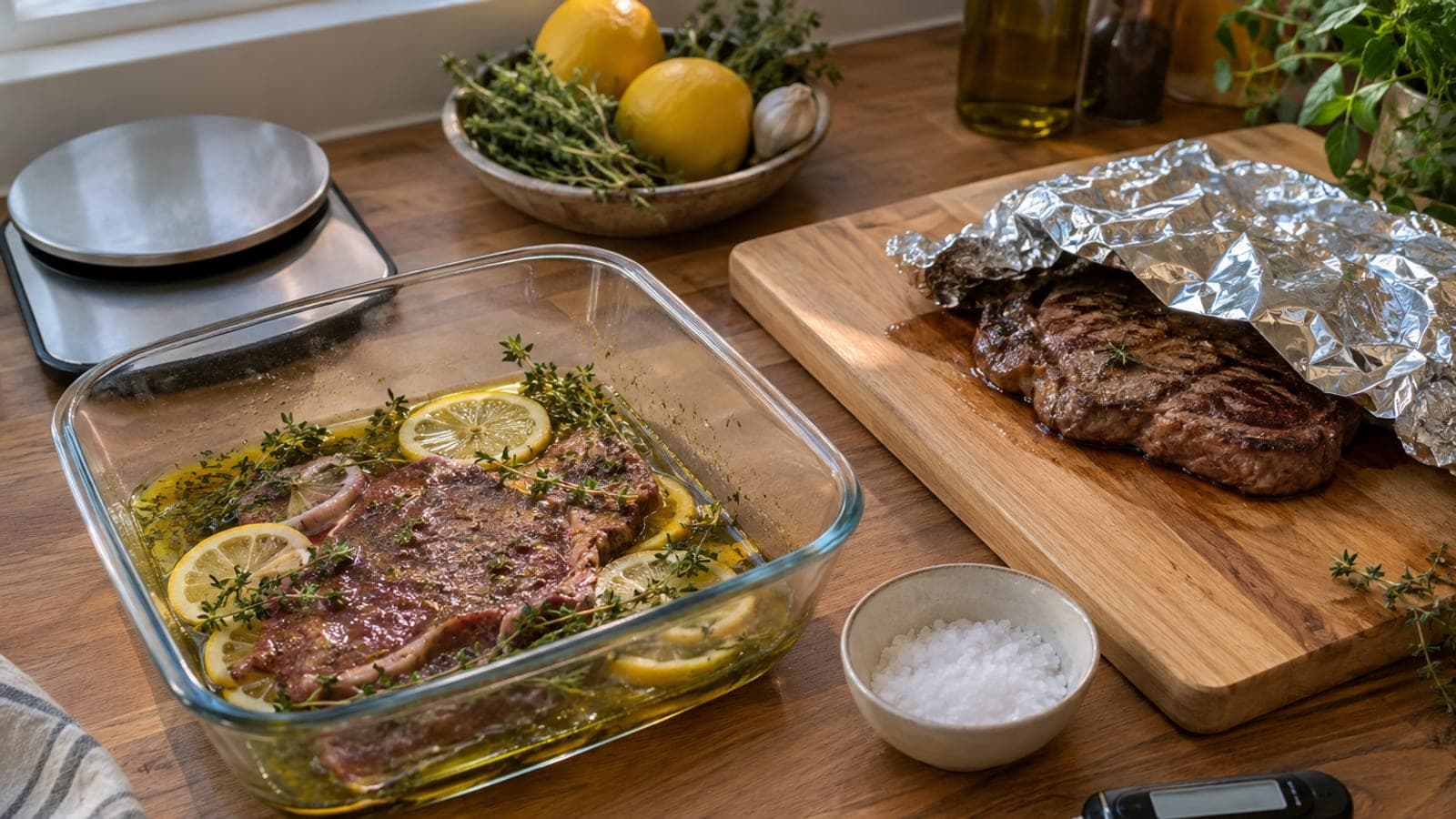
Short answer
Use 15 g of salt per 1 kg of meat (1 level tablespoon) and rub it directly onto the meat rather than into the liquid. Keep acidic mixes (lemon, vinegar, yogurt) under 2 hours. Marinate in the fridge at 4 °C: chicken 2-4 hours, red meat 4-12 hours. Take the meat out 30-45 minutes before cooking to temper, then rest it 5-15 minutes after cooking.
What you need
Step by step
Weigh the meat and dry the surface
Unwrap the meat, weigh it on the scale and note the weight, since your salt amount depends on it. Pat both sides dry with paper towels; a wet surface keeps the marinade from clinging and stops the meat from browning in the pan. Trim thick fat down to about 5 mm and cut away the rest.
Measure the salt and apply it directly
Weigh 15 g of salt per kilogram and rub it evenly over every surface on a tray. Salting the meat directly instead of salting the marinade pulls moisture out and then draws the brine back in, so the meat stays juicier. For thick cuts like steak, let the salt sit for 40 minutes.
Mix the marinade at 3 parts oil to 1 part acid
In a bowl, whisk 3 tablespoons of oil with 1 tablespoon of lemon juice or vinegar, then add 2 crushed garlic cloves, 1 teaspoon black pepper and 1 teaspoon oregano. For a yogurt marinade, stir 2 tablespoons of oil into 4 tablespoons of strained yogurt and skip the extra acid.
Seal it and set a timer in the fridge
Put the meat in the glass container or zip-lock bag, pour the marinade over it, press the air out and seal, then place it on the bottom shelf of the fridge at 4 °C. Set an alarm on your phone: chicken breast 2 hours, chicken thigh 4 hours, beef tenderloin 4 hours, lamb or beef cubes 8-12 hours. Never go past 2 hours with an acidic marinade.
Temper the meat and wipe off the excess
Take the meat out of the fridge 30-45 minutes before cooking and leave it on the counter; cold meat burns outside while the center stays raw. Wipe the surface marinade off with paper towels, especially yogurt and garlic bits, which scorch in the pan and turn bitter.
Cook to a target internal temperature
Heat the pan or grill thoroughly and do not move the meat for the first 2-3 minutes. Push the probe into the thickest part: 74 °C for chicken, 54-56 °C for medium beef steak, 58 °C for lamb chops. The temperature climbs another 2-3 °C while resting, so pull it just under your target.
Rest it under loose foil on a board
Move the meat to a wooden cutting board or an upturned plate and drape foil over it without pressing it down. Rest thin chops and chicken pieces 5 minutes, a 3-4 cm steak 10 minutes, and a whole chicken or roast 15-20 minutes so the juices redistribute through the fibers.
Slice against the grain and spoon the juices back
Once resting is done, find the direction of the fibers and hold the knife perpendicular to them, cutting slices about 1 cm thick; this noticeably reduces chewiness. Spoon the juices collected on the board over the slices and serve right away.
Tips
Watch out
Do not leave meat in an acidic marinade (lemon, vinegar, wine) for more than 2 hours; the acid partly cooks the outer fibers and the meat turns dry and mealy once cooked. Never use raw-meat marinade as a sauce unless you boil it for at least 3 minutes. Marinating on the counter for hours puts the meat in the 4-60 °C bacterial growth range, so keep the whole process in the fridge.
Frequently asked questions
+Does salt dry the meat out during marinating?
No. At around 15 g per kilogram, salt first pulls moisture to the surface, then the meat reabsorbs that brine and loses less liquid while cooking.
+Can I marinate meat at room temperature on the counter?
No. Raw meat grows bacteria quickly between 4 and 60 °C, so the entire marinating time must happen in a covered container in the fridge at 4 °C.
+Doesn't resting let the meat go cold?
A thick cut loses only a few degrees in 10 minutes and stays at serving temperature. Warming the board slightly and draping the foil loosely reduces the loss.
+Do pineapple or kiwi actually tenderize meat?
They do, but very fast. Their enzymes can turn meat mushy in 20-30 minutes, so keep the contact time to about 15 minutes.
+Do cubed meat and ground meat need resting too?
Cubes need only 3-5 minutes. Meatballs and burger patties rested for 5 minutes will not bleed their juices onto the plate when you cut them.
Sources and verification
Last verified: 13 Eylül 2026. tell us. Weights and temperatures are metric, as in the Turkish original; convert to Fahrenheit if your thermometer is imperial.
This content is for information only; for official procedures the relevant institution’s current announcements take precedence. Details: disclaimer.