How do you clean mould from window seals and glass edges?
Lift black mould off rubber window gaskets and glass edges in 30 minutes with diluted bleach or a bicarbonate paste, then stop it returning.
Short answer
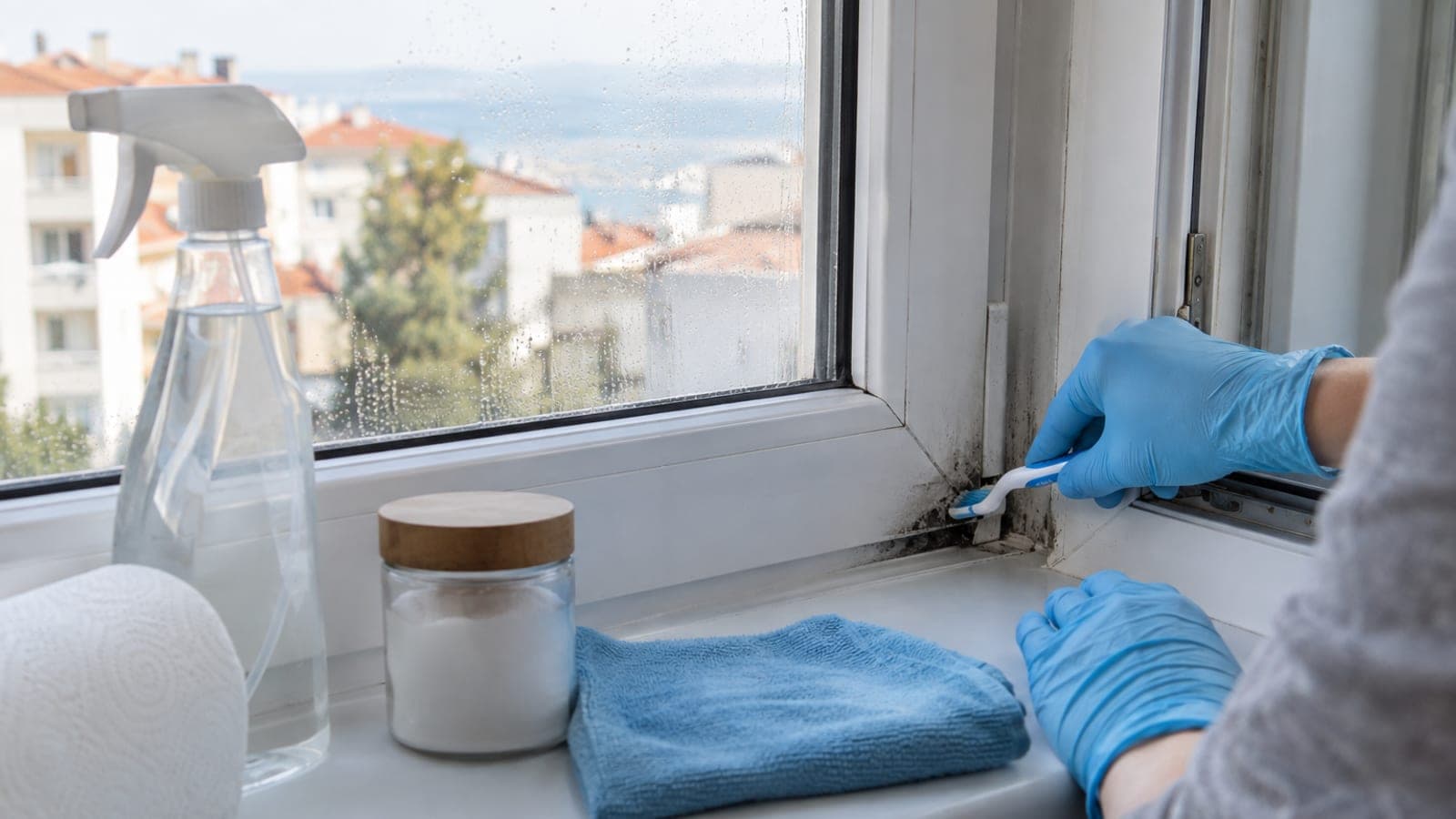
Dilute 1 part bleach in 10 parts cold water, put on gloves and open the window. Soak strips of kitchen paper in the solution and press them onto the mouldy gasket for 30 minutes. Peel the strips off, scrub with an old toothbrush, wipe twice with clean water and dry thoroughly with a cloth. Repeat once if any staining remains.
What you need
Step by step
Ventilate and protect yourself
Open the window fully and leave the room door ajar; bleach fumes sting the eyes and throat in a closed space. Wear rubber gloves, and add an FFP2 mask if the mould covers a wide area. Move ornaments and curtains away from the window before you start.
Remove loose mould dry
Do not start with a damp cloth, since wet wiping spreads spores across the room. Lift the loose black film and dust off the gasket with dry kitchen paper and drop the paper straight into a bin bag. Vacuum crumbs and dead insects out of the sill corners.
Mix the solution and let it soak
Pour 100 ml bleach and 1 litre cold water into the spray bottle and shake it; hot water releases chlorine gas much faster. Tear kitchen paper into 3-4 cm strips, dip them in the solution and press them firmly onto the mouldy gasket. Leave for 30 minutes, because the mould roots sit inside the rubber's pores and contact time does more than scrubbing.
Scrub and rinse
Bin the strips, dip the toothbrush in the solution and scrub along the groove of the gasket and the glass-to-frame joint lengthways. Wipe twice with a microfibre cloth wrung out in clean water to remove chlorine residue. For any grey shadow left behind, apply a second 15-minute soak.
Switch to bicarbonate if you avoid bleach
Mix 3 tablespoons of bicarbonate of soda with a little water into a paste, spread it on the mould, leave 20 minutes and scrub with the brush. Spray 100 ml white vinegar over it, and once the fizzing stops, wipe and rinse. This is gentler than chlorine and will not bleach the stain out, but it is safe on painted wood frames and coloured silicone.
Dry the surface completely
Wipe the gasket, glass edge and sill with a dry microfibre cloth until no moisture is left, as mould returns within 24 hours on a damp surface. Leave the window open for one to two hours, or run the heating if you have it. Clear the drainage hole in the lower channel with a toothpick so water cannot pool.
Renew failed silicone
If the mould has grown into the silicone and the darkening will not shift, cut the old bead out along its full length with a craft knife, wipe the area with alcohol and let it dry. Run a mould-resistant sanitary silicone made for wet areas in one continuous pass and leave it to cure for 24 hours. New silicone is the only lasting fix for mould that cleaning cannot remove.
Cut the damp off at source
Open the window fully, not just on the latch, for 10 minutes twice a day to create a through-draught; winter condensation on the glass is the main cause of this mould. Run bathroom and kitchen extractor fans for 15 minutes after showering or cooking. If the glass is permanently misted, consider a 10-20 litre dehumidifier or moisture absorber tubs in cupboards.
Tips
Watch out
Bleach fumes cause dizziness and airway irritation quickly in a closed room, and must never be mixed with vinegar, hydrochloric acid or ammonia-based products. If you have asthma, COPD or allergies, do not do chlorine cleaning yourself. Wiping mould with a wet cloth first is the most common mistake: it spreads spores around the room and the staining reappears over a wider area within days.
Frequently asked questions
+Why won't the black staining on my window gasket come off at all?
Once mould has penetrated the pores of the rubber or silicone, surface cleaning is not enough. If darkening remains after two soaking treatments, the gasket or the silicone bead needs replacing.
+Does bicarbonate of soda and vinegar really work instead of bleach?
It works, but more slowly and it does not bleach the stain out. The bicarbonate paste lifts mould mechanically and the vinegar's acid weakens live growth; that is enough for light, fresh mould, while chlorine is more effective on old black staining.
+How soon does mould come back after cleaning?
If the moisture source remains, it returns within one to three weeks. Two 10-minute full airings a day and wiping the condensation off the glass daily prevents most of the recurrence.
+As a tenant, who is responsible for window mould?
Water ingress from insulation, roof or plumbing counts as a structural defect and is the landlord's responsibility. Condensation mould caused by not ventilating is treated as a use issue; photographing the situation and reporting it in writing helps either way.
+Do I need to buy a dehumidifier?
It helps if the glass is constantly misted and room humidity is above 60 percent. A unit rated at 10-12 litres a day suits a 20-30 square metre room, though trying a proper ventilation habit first is the cheaper step.
Sources and verification
Official pages for this process
Published: September 12, 2026. tell us. Adapted from Turkish guidance; UK product names and 60-degree wash temperatures used, and winter condensation remains the typical cause in cold, poorly ventilated flats.
This content is for information only; for official procedures the relevant institution’s current announcements take precedence. Details: disclaimer.