How do you revive a wilting orchid and make it bloom again?
A root check, the right bark mix and a night temperature drop can bring a bare phalaenopsis back into bloom in two to four months.
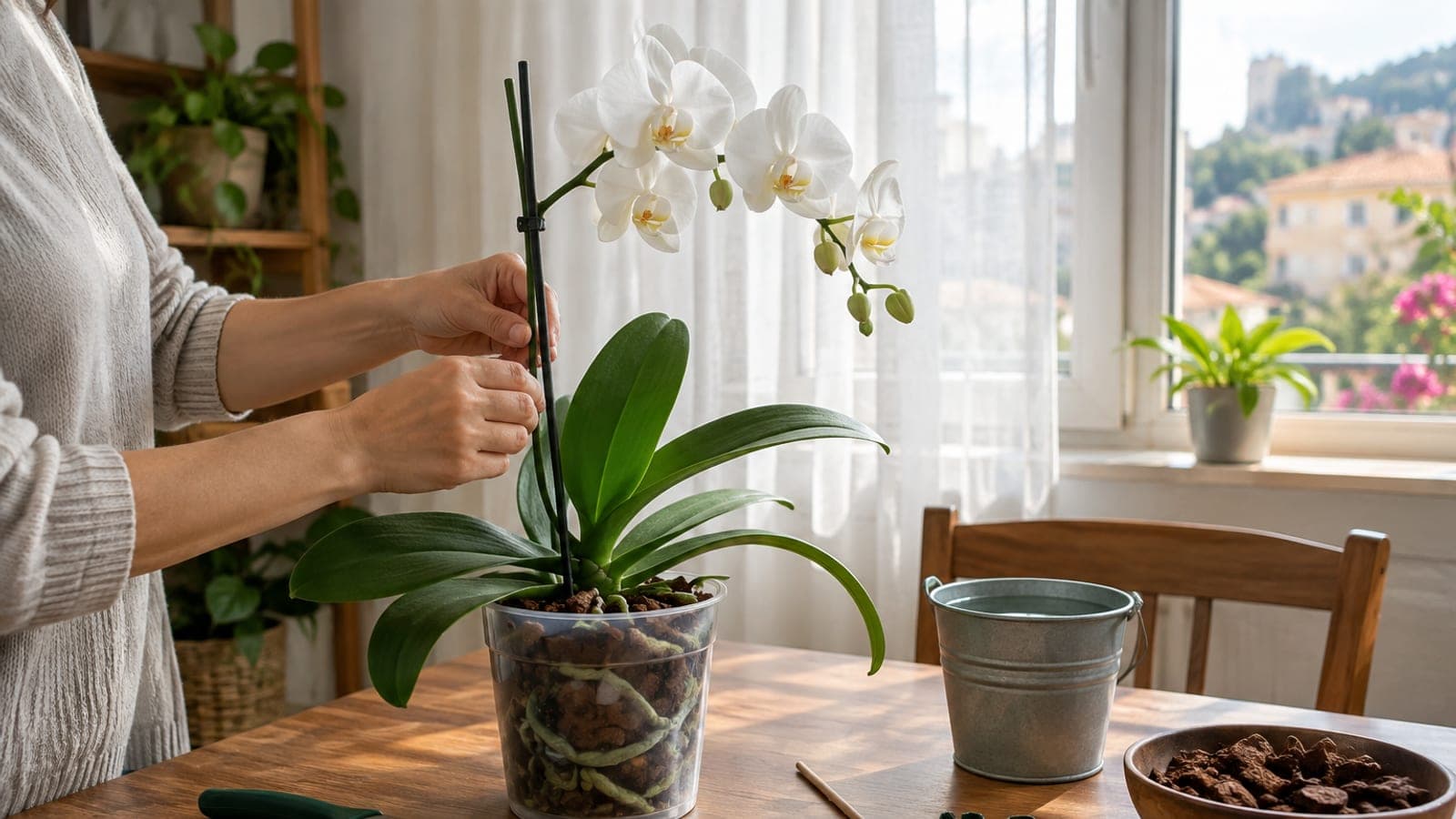
Short answer
Cut off the dried flower spike, unpot the plant and trim away rotten roots, then repot into a clear pot with drainage holes using orchid bark only. Water by soaking for 15 minutes every 7-10 days, keep the plant in bright indirect light at an east or west window, and feed with half-strength orchid fertiliser twice a month. Give it nights of 15-18 °C for 6-8 weeks and a new spike will appear.
What you need
Step by step
Diagnose the plant
Handle the leaves: wrinkled, limp foliage usually means root rot rather than thirst. Lift the pot, and if it feels heavy and the mix smells damp and sour, it has been overwatered. One soft yellow bottom leaf is normal ageing, but two yellowing leaves in a row means the roots need attention.
Cut the spent flower spike
If the whole spike is brown and dry, cut it off leaving about 1 cm above the base. If it is still green, cut 1-2 cm above the top dormant node, since a side spike can emerge there within 8-12 weeks. Wipe the blade with alcohol before every cut and dust the wound with cinnamon.
Clean the roots and refresh the pot
Slide the plant out, pull the old bark away by hand and rinse the roots in lukewarm water. Trim brown, hollow roots that turn mushy under your fingers back to firm tissue, and keep the plump silver-green ones. Let the cuts dry for 30 minutes, then set the plant in the clear pot and fill the gaps with pine bark only, never soil or potting compost.
Set the right spot and light
Place the pot 30-50 cm inside an east or west facing window, and behind a sheer curtain on a south window. Dark green leaves mean too little light, red-purple blotches mean too much, and the ideal shade is light grass green. Keep it out of the direct path of radiators and air conditioning vents.
Water by soaking
Stand the pot in a 3-5 litre bucket of room-temperature water for 15 minutes without wetting the crown, then let it drain for 10 minutes. Repeat every 7 days in summer and every 10-14 days in winter. When the bark dries out and the roots turn silvery, it is time to water again, and never leave water sitting in the saucer.
Feed at half strength
Mix half the dose printed on the label, usually 0.5-1 gram per litre of water, and apply it twice a month onto damp bark right after watering. Every fourth watering, flush with plain water to stop salts building up. Fertiliser on dry roots will scorch the root tips.
Force blooming with cooler nights
From September to November or March to April, give the plant 6-8 weeks of 15-18 °C nights and 22-25 °C days. The easiest way is moving the pot to an unheated room or onto a windowsill overnight. Stretch watering to every 10-14 days during this period but keep feeding. A new spike is flat and mitten-shaped, not round like a root.
Support the new spike and wait
Once the spike passes 15 cm, push a bamboo stake in near the rim so it misses the roots, and clip the spike every 10 cm. Do not turn or move the pot until the buds show, because a change of position causes bud drop. Expect 8-12 weeks from spike emergence to the first open flower.
Tips
Watch out
The most common mistake is keeping the orchid in a decorative glass vase or a pot with no drainage holes and watering it often, which suffocates and rots the roots in 2-3 weeks. Never let water collect in the leaf axil at the centre of the stem, because crown rot kills the plant and cannot be reversed. If water pools there, blot it dry with a paper towel straight away.
Frequently asked questions
+Is putting ice cubes on an orchid a good idea?
No. Ice exposes the roots to near-freezing temperatures and damages tissue, and it delivers too little water. Soaking with room-temperature water is far safer.
+Why is my orchid not flowering?
The two usual causes are not enough light and no difference between day and night temperatures. Give it bright indirect light and 15-18 °C nights for 6-8 weeks.
+Can the plant survive if every root has rotted?
There is a chance while the stem is still firm. Trim the rot, sit the plant on damp sphagnum moss in a clear container with the lid ajar at 20-25 °C, and new roots may form in 4-8 weeks.
+When should I repot an orchid?
After the flowers drop, roughly every 18-24 months. If the bark has crumbled into a soil-like texture or the roots no longer fit the pot, do it sooner.
+Where can I buy orchid bark mix?
Garden sections of large supermarkets, the plant aisle of hardware stores and florists all sell orchid bark. If you cannot find it locally, order screened pine bark in 2-3 cm pieces online.
Sources and verification
Last verified: 13 Eylül 2026. tell us. Temperatures are given in Celsius and pot sizes in centimetres, matching the labels used by garden centres in Turkey and most of Europe.
This content is for information only; for official procedures the relevant institution’s current announcements take precedence. Details: disclaimer.