How do you use a phone without a case?
A risk-managed transition plan for anyone who wants to strip the case off and carry the phone bare.
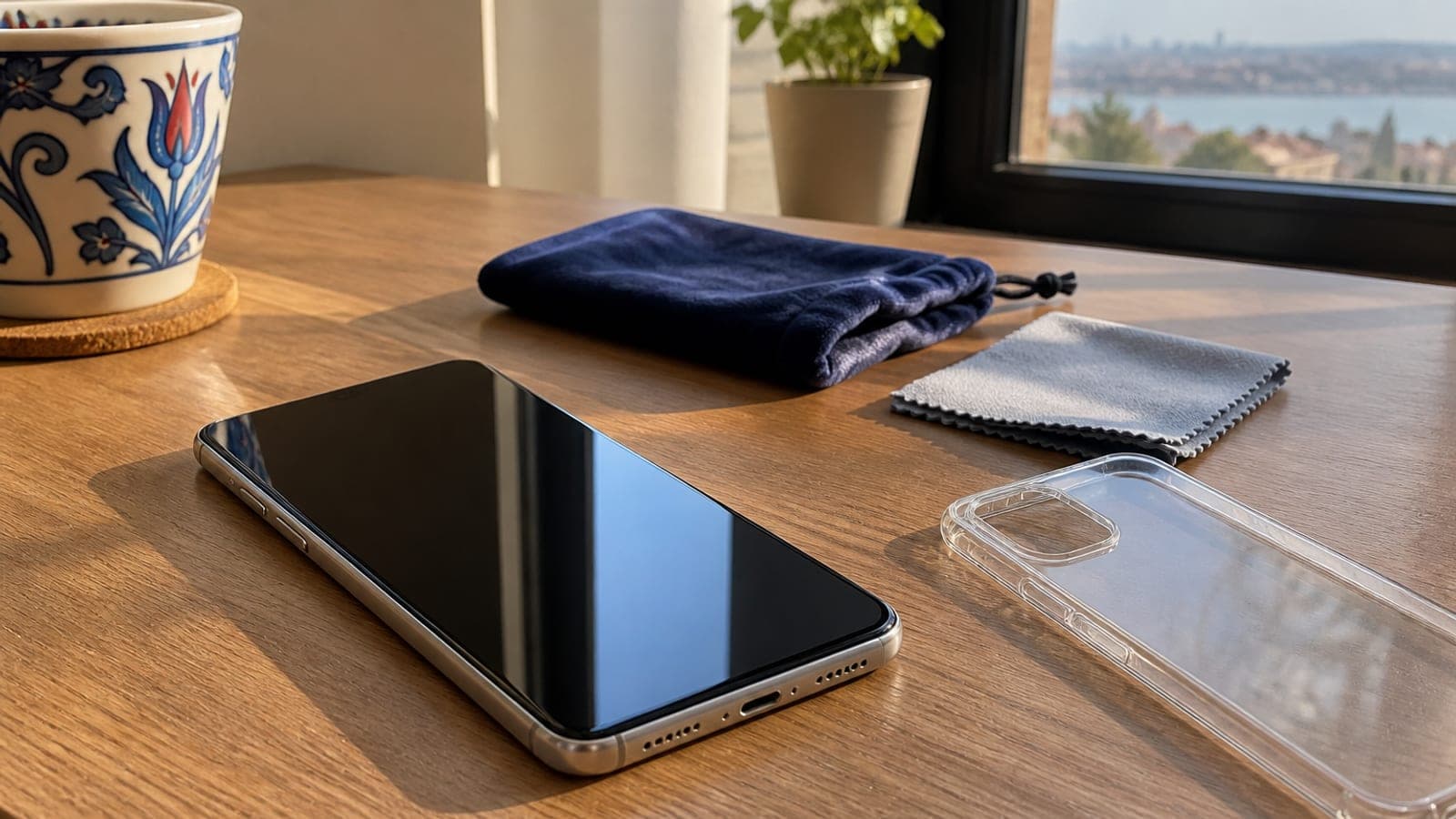
Short answer
Before the case comes off, apply tempered glass to the screen and the rear camera glass, enroll the handset in device insurance through your carrier or an insurer, and buy a thin felt sleeve for bag carry. Then remove the case, spend two weeks training yourself to set the phone down in the same spot every time, and wipe the body with a microfiber cloth once a week.
What you need
Step by step
Check how tough the handset actually is
Look up the frame material, the cover glass generation, and the IP water and dust rating in the spec sheet. Aluminium or titanium frames, Gorilla Glass Victus or newer, and an IP68 rating are the best candidates for caseless life. If the phone has a plastic shell or no rating at all, think twice.
Cover the screen and camera with glass
Apply the tempered glass in a dust-free room while the case is still on. Add a camera glass protector too, since the rear camera island is usually the part that sticks out furthest from the body. Those two pieces cover most of the expensive repair risk of going bare.
Get the device insured
Enroll the phone in your carrier's device protection plan or an insurer's handset policy. Confirm in writing that cracked screens, drops, and liquid contact are covered, and check the deductible plus the annual claim limit. Keep the invoice and the IMEI number saved digitally.
Take the case off and clean the body
You will find dust, grime, and trapped moisture underneath. Wipe the body with a slightly damp microfiber cloth, then clear the charging port and speaker grilles with a dry soft brush. Wait until everything is fully dry before you start using the phone.
Rewrite your carrying habits
A bare phone is more slippery, so your grip has to change. Stop using your back pocket, never share a front pocket with keys or coins, and always use the sleeve inside a bag. On tables, set it down screen up.
Keep the case as a raincoat
Going caseless does not mean throwing the case away. Snap a thin case back on for travel, camping, construction sites, the beach, or a room full of small children, then take it off again afterwards. Store it somewhere you can reach in seconds.
Review the condition every two weeks
Hold the phone up to a light and check for fresh scratches, dents in the frame, and cracks in the camera glass. Accept small scratches as normal wear. If you are dropping the phone more than once a week, caseless is not for you, so go back to a slim case.
Tips
Watch out
The most expensive caseless damage is a broken back glass; many repair shops price a rear glass swap close to a screen replacement, and on some models the whole chassis has to be replaced. Removing the case without an insurance policy can mean paying half the value of the phone after a single drop.
Frequently asked questions
+Does a caseless phone really break faster?
At the same drop height, yes, because a case absorbs a noticeable share of the corner impact. That said, modern phones with metal frames and certified cover glass usually survive a waist-height fall onto a flat floor with nothing worse than a scratch.
+Where do you buy device insurance?
Mobile carriers sell device protection plans, and banks' insurance arms plus independent agencies sell standalone handset policies. Applications usually have to be filed within 15 to 30 days of buying the phone.
+Does a phone run hotter without a case?
The opposite is true. A case acts as insulation, so a bare phone cools better while charging and gaming, which helps battery longevity over time.
+Doesn't a screen protector defeat the point of going caseless?
No, the two do different jobs. A screen protector adds almost no thickness and stops scratches, while a case changes how the phone feels and looks in your hand.
+Does an IP68 rating protect a caseless phone from water?
The rating describes the phone as it left the factory, and the seals age with use. It will handle rain and kitchen splashes, but deliberately submerging a phone is a bad idea with or without a case.
Sources and verification
Published: September 12, 2026. tell us. Carrier device protection plans and enrollment windows differ by country; check the terms your local operator and insurer publish before removing the case.
This content is for information only; for official procedures the relevant institution’s current announcements take precedence. Details: disclaimer.