How do you cook rice pilaf so the grains stay separate?
With baldo rice, a 1 part rice to 1.5 parts boiling water ratio, proper rinsing and a 12-minute rest, the grains never stick together.
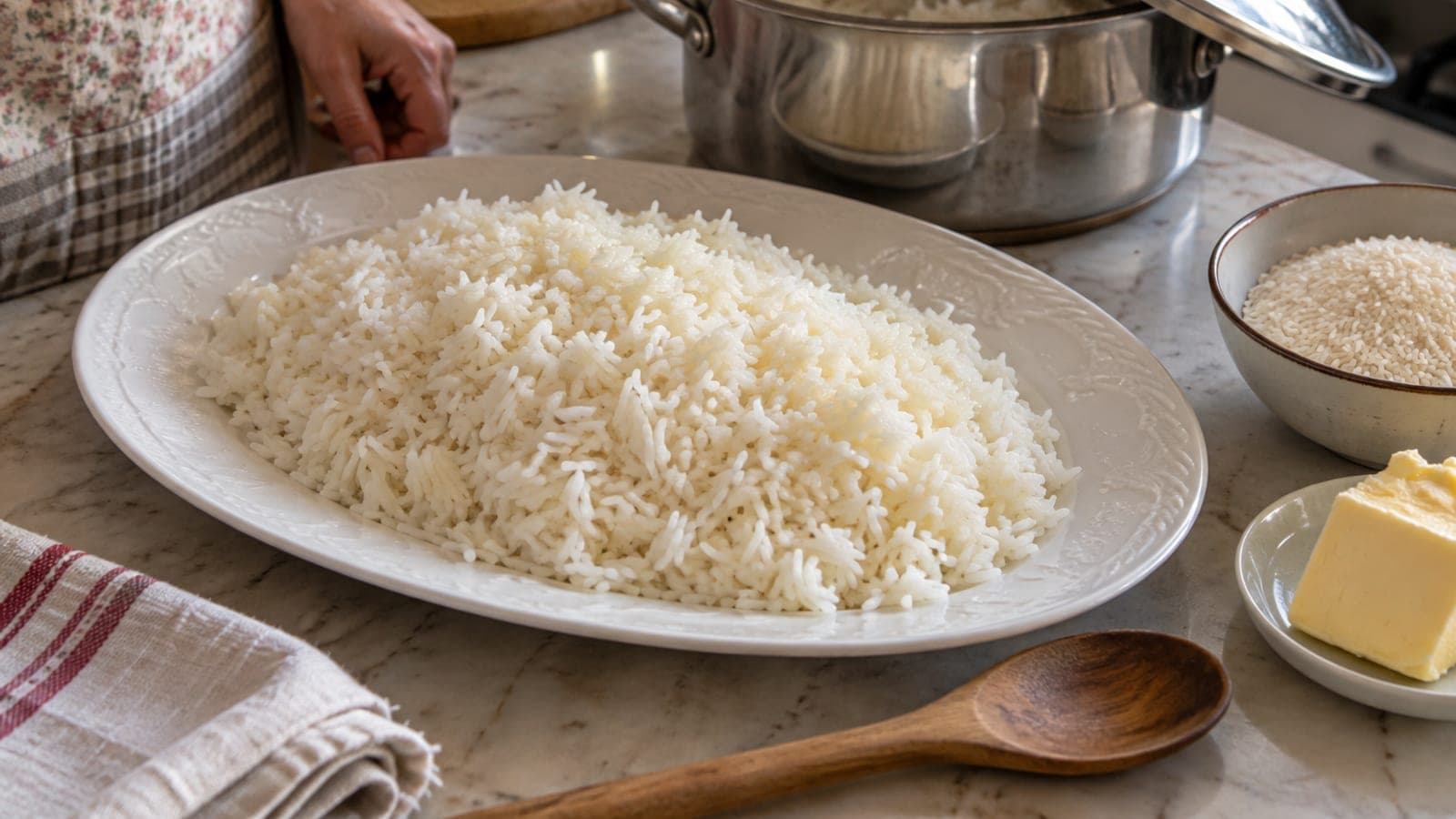
Short answer
Rinse 2 cups (about 360 g) baldo rice five times in lukewarm water, soak it 30 minutes in lightly salted lukewarm water, then drain. Toast it 2 minutes in 2 tbsp butter plus 1 tbsp oil, pour in 3 cups boiling water and 1.5 tsp salt. Cover and cook on the lowest heat for 12-13 minutes, turn off the burner, lay a paper towel under the lid and rest 12 minutes, then fluff with a fork.
What you need
Step by step
Rinse the rice
Put the rice in a wide bowl, cover it with lukewarm water, stir gently with your hand and pour off the cloudy water. Repeat 4-5 times until the water runs clear. This removes the loose starch clinging to the grains; if that starch stays, the pilaf turns to mush.
Soak in salted lukewarm water
Cover the rinsed rice with lukewarm water at around 40 C and add 1 tsp salt, then let it sit 30 minutes. Salted water firms the grain and keeps it from breaking as it cooks. Drain in a strainer for 5 minutes afterward and never rub the grains.
Toast in the fat
Set the heavy-bottomed pot over medium heat and melt 2 tbsp butter with 1 tbsp oil. If you are using vermicelli, brown it first for 1 minute, then add the drained rice and stir with a wooden spoon for 2 minutes. When the grains absorb the fat and look glassy, the toasting is done.
Add the boiling water
Pour in 3 cups of water you boiled separately, all at once, and add 1.5 tsp salt. Cold water shocks the grains and cracks them, so the water must be at a full boil. Stir once and leave it alone; stirring after this point releases starch.
Cook on low heat
Once the water returns to a boil, turn the burner to its lowest setting and put the lid on. Cook 12-13 minutes without lifting the lid at all. At the end, tilt the lid and check the edge with a spoon tip: the water should be fully absorbed and small holes should have formed on the surface.
Rest under a paper towel
Turn off the heat, spread a sheet of paper towel or a clean kitchen cloth over the pot and set the lid on top of it. Let it rest 12-15 minutes. The towel absorbs the rising steam so condensation does not drip back and wet the pilaf.
Fluff with a fork and serve
When the resting time is up, open the lid and lift the pilaf gently from the bottom upward with a fork, not a spoon. Stirring with a spoon crushes the grains and makes them stick. Transfer to a warm serving dish and serve right away.
Tips
Watch out
Opening the lid and stirring during cooking is the most common mistake: steam escapes, starch is released and the pilaf turns to mush. Soaking the rice in warm water for more than 30 minutes also swells and cracks the grains. And if you do not measure the water precisely, the excess pools at the bottom and makes the pilaf pasty.
Frequently asked questions
+How much water does pilaf need?
For baldo rice, 1.5 parts boiling water per 1 part rice is ideal; for osmancik, use 1.25 parts. Measure the rice and the water with the same cup.
+Can you make pilaf without rinsing the rice?
You can, but the grains will not stay separate. The starch on unrinsed rice dissolves during cooking and glues the grains together, leaving the pilaf sticky.
+My pilaf turned to mush. Can I save it?
Turn off the heat and let the steam escape with the lid off for 10 minutes, then lay a paper towel on top and cover it. It will not fully recover, but some of the excess moisture is drawn out.
+Can I use only oil instead of butter?
Yes, 3 tbsp of sunflower or olive oil works fine. Butter only adds aroma and flavor; rinsing and the water ratio are what actually keep the grains separate.
+Is the resting step required, and for how long?
It is required. Resting 12-15 minutes off the heat balances the moisture inside the grains; skip it and the top grains stay firm while the bottom ones stay wet.
Sources and verification
Published: September 12, 2026. tell us. Measurements use the Turkish tea-glass style cup (about 200 ml); keep one cup for both rice and water.
This content is for information only; for official procedures the relevant institution’s current announcements take precedence. Details: disclaimer.