How do you remove fridge odour and arrange the shelves?
Clear fridge odour at its source in about an hour, then load each shelf correctly so the smell does not come back.
Short answer
Unplug the fridge and empty it. Wipe the interior and shelves with 1 tablespoon baking soda in 1 litre of warm water, clear the drain hole, and wipe the door gaskets with a vinegar cloth. Air-dry with the door open 30 minutes, then set 4 °C and -18 °C. Store ready-to-eat food on top, raw meat on the bottom shelf, produce in drawers, and leave an open dish of baking soda inside.
What you need
Step by step
Unplug and empty
Pull the plug from the socket, easing the appliance forward if the socket sits behind it. Move all food to the counter and wrap frozen items in a cooler bag or thick blanket. Throw out anything expired, mouldy or leaking, because a single spoiled item is usually the whole source of the smell.
Remove the shelves and drawers
Lift each glass shelf, crisper drawer and door bin up and pull it forward to release it. Let glass shelves sit for 15 minutes to reach room temperature before washing them in warm soapy water. Never pour hot water straight onto cold glass, as the shock can crack it.
Wipe the interior with baking soda solution
Stir 1 tablespoon of baking soda into 1 litre of warm water. Soak a microfibre cloth in it and wipe the side walls, ceiling and floor from top to bottom. Baking soda neutralises odour molecules, while bleach or harsh chemicals can craze the plastic and leave a chemical smell that transfers to food.
Clear the drain hole and gaskets
Find the small drain hole low in the centre of the rear wall, behind the crisper, and clear it with an old toothbrush or cotton swab. A blocked hole is the most common cause of standing water and a musty smell. Wipe into the folds of the door gasket with a cloth dipped in equal parts vinegar and water, then dry it.
Dry and reset
Leave the door open for 30 minutes so the interior dries completely, since a damp surface brings odour and mould straight back. Plug the fridge in and set the fresh food compartment to 4 °C and the freezer to -18 °C. Wait 30 to 60 minutes for the inside to cool before returning any food.
Reload the shelves in the right order
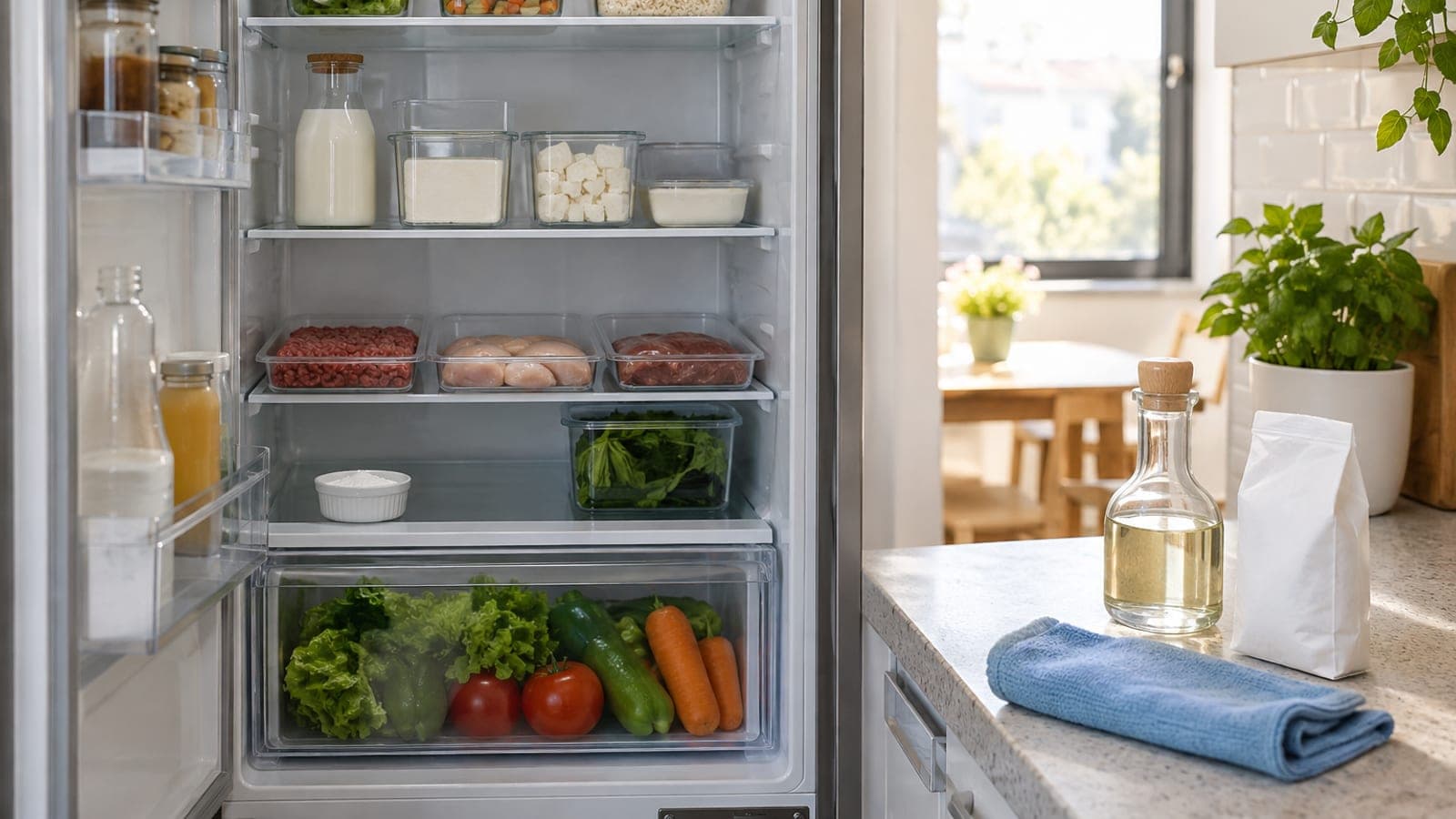
Top shelf: cooked food, leftovers and jars. Middle shelf: dairy and cheese. Bottom shelf: raw meat, chicken and fish, so nothing can drip onto food below. Keep fruit and vegetables in separate drawers and store apples and bananas away from other produce. Use the door bins only for water, drinks and sauces, never eggs or milk.
Add an odour absorber
Put 3 to 4 tablespoons of baking soda in a small open dish at the back of the bottom shelf and replace it every three months. A jar of dry coffee grounds or half a lemon works as an alternative. Move strong-smelling items such as onion, cut cucumber and cheese into sealed glass containers.
Tips
Watch out
Always unplug the appliance before cleaning and never push a wet cloth into the interior light or the fan housing. Pouring hot water on a cold glass shelf can crack it, and bleach or ammonia-based cleaners leave permanent cracks in plastic plus a chemical smell that transfers to food.
Frequently asked questions
+How long does baking soda take to absorb the smell?
An open dish of baking soda noticeably reduces light odours within 24 to 48 hours. If the smell is still there after three days, the cause is an uncleaned spill or a blocked drain hole.
+What temperature should a fridge be set to?
The fresh food compartment should sit at 4 °C and the freezer at -18 °C. On dial models the middle setting, usually 3, matches this, but a separate thermometer is the reliable way to confirm it.
+Why is the door shelf the wrong place for eggs?
The door swings through a temperature change every time you open it, and that fluctuation speeds up spoilage. Keep eggs in their original carton on a middle shelf.
+What if fish smell soaks into a shelf?
Take the shelf out, wipe it with equal parts vinegar and water, wait 10 minutes and rinse. For stubborn odour, sprinkle dry baking soda over the clean shelf and leave it for two hours.
+How close to the wall can I put the fridge?
Allow 5 cm at the sides, 10 cm at the back and 30 cm above. Without that clearance the condenser cannot shed heat, energy use climbs and interior humidity rises.
Sources and verification
Published: September 12, 2026. tell us. Adapted from a Turkish source; temperatures are given in Celsius and shopping costs were omitted since prices vary by market.
This content is for information only; for official procedures the relevant institution’s current announcements take precedence. Details: disclaimer.