How do you bleed air from a radiator?
Cold at the top, warm at the bottom? A bleed key and a rag fix that radiator in about 20 minutes.
Short answer
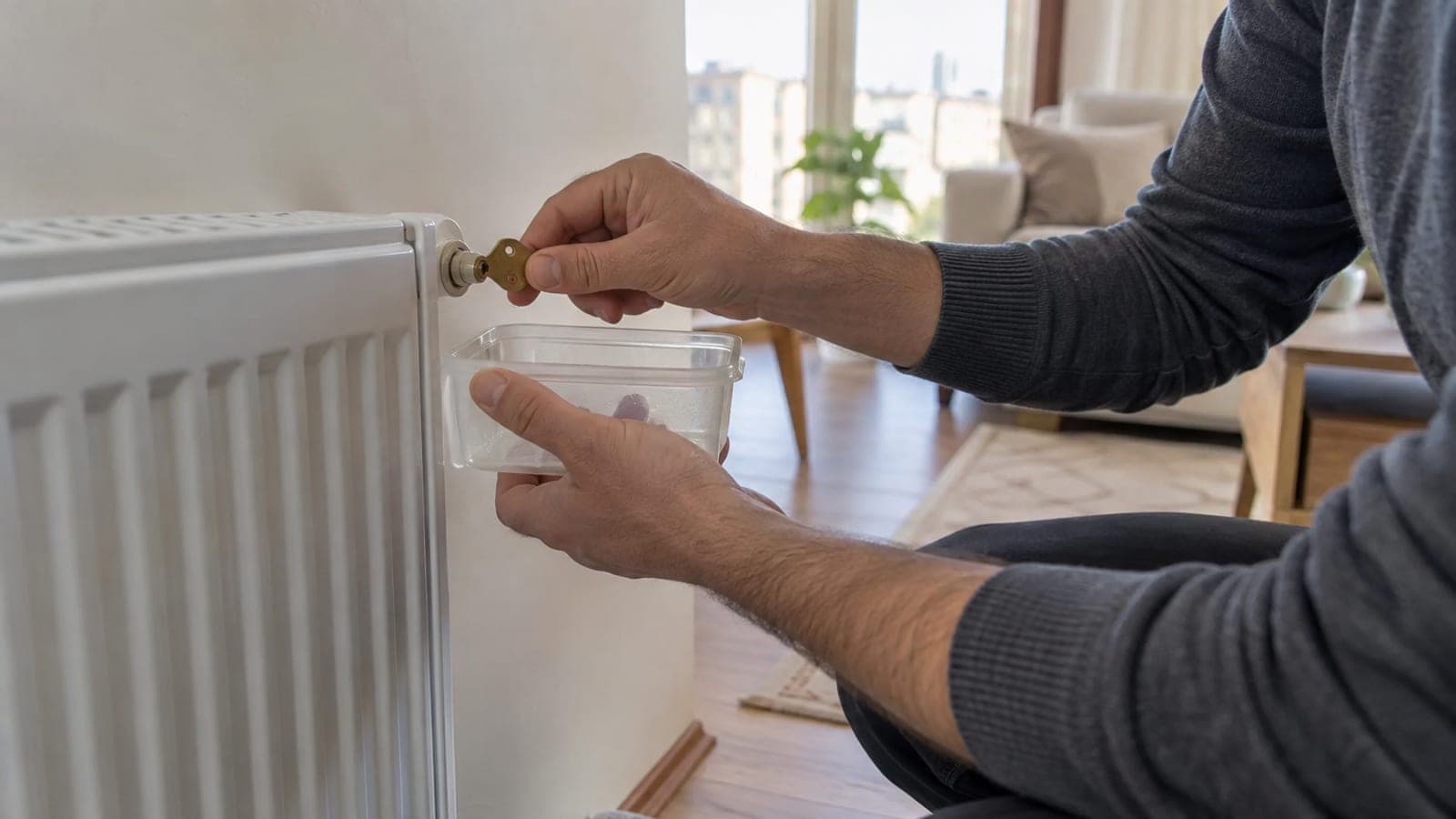
Switch the boiler off and let it cool for 30 minutes. On the lowest-floor radiator, fit a bleed key to the valve at the top corner and turn it a quarter turn counter-clockwise; when the hissing stops and a steady stream of water appears, close it. Once every radiator is done, top the system up at the filling loop to 1.5 bar and restart the boiler.
What you need
Step by step
Switch the boiler off and let it cool
Press the on/off button on the boiler panel and unplug it from the mains. The circuit holds hot water under pressure, so wait 30 to 60 minutes before touching any radiator. The wait also lets trapped air collect at the top of each radiator, which is exactly where you want it.
Read the pressure on the boiler display
Note the current reading from the pressure gauge on the front panel or the bar value on the digital display. On a cold system, 1.2 to 2 bar is normal and 1.5 bar is ideal. Pressure drops as you release air, so knowing where you started matters.
Start at the lowest floor, furthest radiator
Work in order: begin with the radiator on the lowest floor that sits furthest from the boiler, then move upwards. Going the other way pushes air back down and traps it in the lower radiators. Lay newspaper under the radiator and hold the container level with the valve.
Open the bleed valve a quarter turn
Fit the key onto the small bleed valve at the top corner of the radiator and turn it counter-clockwise, only a quarter to a half turn. Do not unscrew it all the way; if the valve comes out, pressurised water sprays out. A hissing sound means the air is escaping.
Close the valve once water runs steadily
When the hiss stops and a thin, drip-free stream of water starts, turn the valve clockwise and close it with light pressure. This usually takes 10 to 30 seconds. Overtightening damages the thread; hand-tight until the leak stops is enough. Dry the valve and the surrounding area with a cloth.
Top the pressure up at the filling loop
Once all radiators are done, check the pressure on the display. If it has dropped below 1.2 bar, slowly open the filling loop valve under the boiler and close it as soon as the needle or value reaches 1.5 bar. Leaving the valve open over-pressurises the system and dumps water through the safety valve.
Restart the boiler and check the radiators heat up
Plug the boiler back in, switch it on, set the mode button to "Winter" (the radiator symbol) and raise the room thermostat to 22-23 degrees. After 15 to 20 minutes, feel each radiator at the bottom and the top. If one is still cold at the top, bleed that single radiator once more.
Tips
Watch out
Never unscrew the bleed valve completely, and never bleed a radiator while the boiler is running. Water in a hot circuit is 70-80 degrees and under pressure, so it can spray out and cause serious burns. If you smell gas at any point, stop, shut off the gas valve and call your local gas emergency line before doing anything else.
Frequently asked questions
+Should the boiler be on or off while bleeding radiators?
Off. Switch it off and wait 30 to 60 minutes so the water cools and the air gathers at the top of the radiator, which makes the job both safer and more effective.
+What pressure should the boiler show after bleeding?
On a cold system, 1.5 bar is ideal and anything from 1.2 to 2 bar is normal. Once the boiler runs and the water heats up, a reading of 2 to 2.5 bar is not a problem.
+The bleed valve will not turn. What now?
It is probably limescaled. Apply a few drops of penetrating oil around the valve, wait 10 minutes, then try gently with small pliers. Forcing it can snap the valve, which means draining the radiator.
+Why is a bled radiator still not heating up?
Usually a blocked valve or sludge inside the radiator. Check that the bottom valve is fully open; if nothing changes, ask a plumber to flush the radiator.
+How often should radiators be bled?
Once at the start of the season is normally enough. Repeat it if you have topped the system up with water or had any plumbing work done.
Sources and verification
Published: September 12, 2026. tell us. Adapted for English readers: pressure values kept in bar and temperatures in Celsius; the Turkish 187 gas emergency number replaced with a generic reference to the local gas emergency line.
This content is for information only; for official procedures the relevant institution’s current announcements take precedence. Details: disclaimer.