How do you remove mould and bad smells from a washing machine?
Clear mould and odour from your washing machine in one afternoon using baking soda, vinegar and a hot empty cycle.
Short answer
Pour 2 cups of white vinegar into the detergent drawer and 100 g of baking soda straight into the drum, then run the empty machine on Cotton 90 °C or the Drum Clean programme. When it finishes, hand-clean the folds of the door seal, the detergent drawer and the pump filter at the bottom, then leave the door open to dry.
What you need
Step by step
Empty and prepare the machine
Check that the drum is completely empty and leave no laundry inside. Pull the detergent drawer out to its stop, press the release catch and lift it fully free, then set it in the sink to soak in hot water.
Add the vinegar and baking soda
Tip the full 100 g packet of baking soda directly into the drum. Pour 2 cups of white vinegar into the main wash compartment of the detergent drawer, the one marked II or 2. The baking soda neutralises odour while the vinegar dissolves limescale and soap residue.
Run an empty 90 degree cycle
Turn the programme dial to "Cotton 90°", or choose "Drum Clean" or "Machine Clean" if your machine has it. Switch on the prewash and extra rinse options, then press Start/Pause. The cycle runs 2-3 hours; do not open the machine during it.
Scrub the door seal
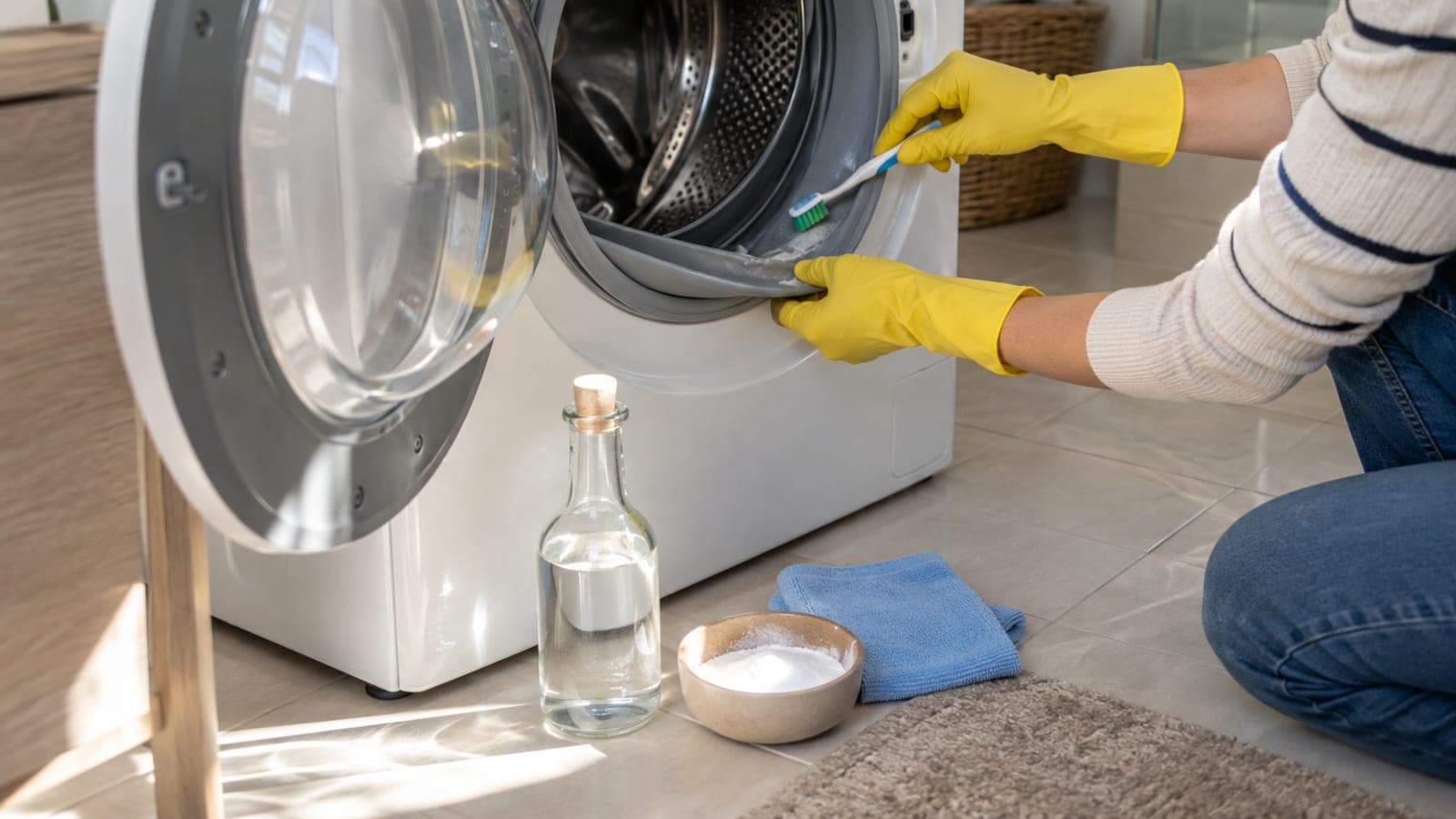
When the cycle ends, put on the gloves and roll the grey rubber seal outwards with your fingers to check between its folds. Dip the toothbrush in vinegar and scrub the black mould spots, then wipe with a damp microfibre cloth and dry thoroughly with a second, dry cloth.
Clean the detergent drawer
Take the soaking drawer and remove the blue or clear siphon from the softener compartment. Brush away gel residue and any pink or black mould, rinse under running water, dry it and push the drawer back until it seats fully.
Drain the pump filter
Open the lower front panel, pull the plug from the thin drain hose beside the filter and catch the water in a wide bowl. Then turn the filter anticlockwise to remove it, clear out lint and hair, and screw it back in firmly.
Dry it out and start an anti-odour habit
Leave the drum door and the detergent drawer open by a few centimetres and wipe the inner surfaces with a dry cloth. From now on, dry the seal after every wash and run an empty 60-90 °C cycle once a month.
Tips
Watch out
Never use vinegar and bleach in the same cycle; the chlorine gas released is toxic. If you plan to use bleach, finish the vinegar cycle first and run at least one empty rinse. Unplug the machine before opening the filter, and remember the water coming out can be hotter than 60 °C.
Frequently asked questions
+What should I do if the musty smell survives the first clean?
Run the empty 90 °C cycle again two days later and have the drain hose behind the drum checked. If the smell persists, call an authorised service for a blocked pump or hose.
+The black marks on the door seal won't come off. Does the seal need replacing?
Once the stains have soaked into the rubber pores, brushing won't shift them, but they are harmless as long as there is no smell. Replace the seal through a service technician only if the rubber is hardened, cracked or leaking.
+What do I select on a machine with no drum clean programme?
Run Cotton 90 °C with an empty drum and prewash switched on. It does the same job, just taking a bit longer and using more water.
+How often should the machine be cleaned?
With normal use, one empty hot cycle a month is enough. Cut that to every two weeks if you have small children, pets or a lot of sportswear in the wash.
+Can I use a dishwasher tablet in the washing machine?
Yes, 1-2 tablets dropped into the drum on an empty 90 °C cycle break down grease and residue well. Don't repeat it every month though, as it can be harsh on the seals.
Sources and verification
Published: September 12, 2026. tell us.
This content is for information only; for official procedures the relevant institution’s current announcements take precedence. Details: disclaimer.