How do you cook dried beans fast and without gas?
A baking soda soak, two water changes and 15 minutes of pressure cooking give soft beans that don't cause bloating.
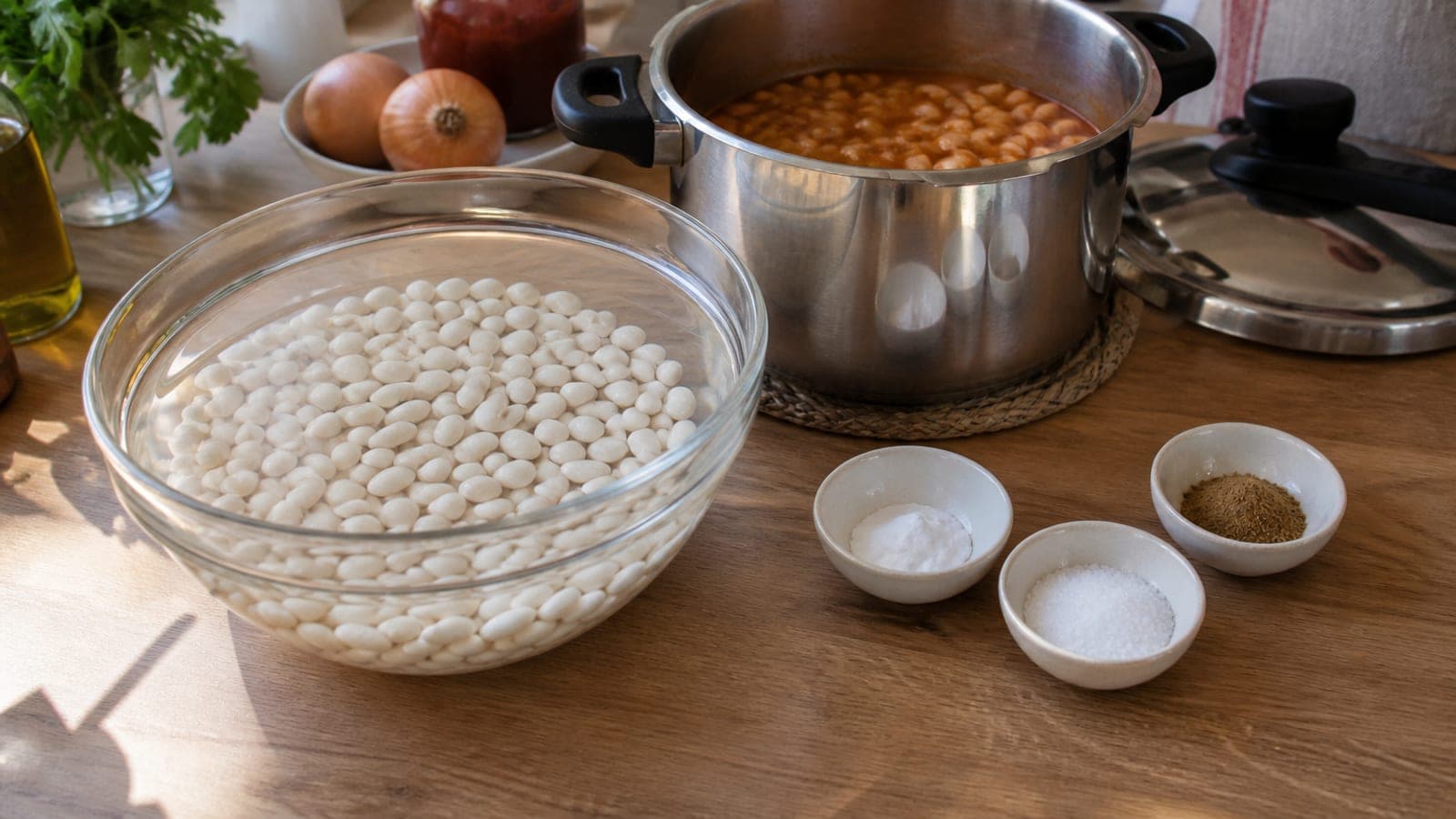
Short answer
Soak the beans 8-12 hours in cold water with 1 teaspoon of baking soda and 1 teaspoon of salt per liter. Drain that soaking water, boil the beans for 5 minutes in fresh water and discard the foamy water too. Then pressure cook them in clean hot water for 15 minutes on low heat after the pot starts hissing. Add tomato paste, tomatoes and lemon only after the beans are soft.
What you need
Step by step
Sort and rinse the beans
Spread 500 g of beans on a light-colored tray and pick out stones, bits of soil and shriveled beans. Rinse them in a colander under plenty of cold water two or three times. Washing off surface dust and loose starch cuts down the foam and the gas-causing residue during cooking.
Soak in salted baking soda water
Cover the beans with cold water about 3-4 fingers above the level, roughly 2 liters, and add 1 teaspoon of baking soda plus 1 teaspoon of salt per liter. Cover the bowl and leave it 8-12 hours, in the fridge in summer. The baking soda softens the skins and the salt keeps them from splitting as they cook.
Pour off all the soaking water
Tip the beans into a colander, pour the soaking water down the drain and rinse the beans with clean water. Most of the raffinose and stachyose sugars that cause bloating have moved into that water. Cooking with it is the single most common reason people end up gassy.
Discard the first boiling water after 5 minutes
Put the beans in an ordinary pot, add fresh water to cover and bring it to a boil. Boil 5 minutes more, skim the white foam off the surface with a spoon, then drain the pot and throw that water out as well. This step noticeably reduces both the gas and the heavy smell of the beans.
Pressure cook for 15 minutes
Move the drained beans to the pressure cooker with hot water 3-4 fingers above them and 2 tablespoons of oil. Fill the pot no more than halfway. Close the lid at the lock mark, and once it starts hissing over high heat, lower the heat and count 15 minutes. Unsoaked beans need 35-40 minutes.
Set the program on an electric cooker
On Instant Pot style machines, lock the lid and turn the steam valve to "Sealing". Press "Bean/Chili" or "Pressure Cook / Manual", set the pressure to "High" and the time to 15 minutes, then press "Start". When the time is up the "Keep Warm" light comes on.
Release the steam slowly and open the lid
Take a stovetop pot off the heat and let it cool on its own for 10 minutes, then lift the valve to release the rest of the steam. On an electric model wait 10 minutes of natural release, then turn the valve to "Venting". Never force the lid before the steam is gone and the safety pin has dropped; a fast release breaks the beans apart.
Add tomato paste and spices last
Soften the onion in oil, fry 1 tablespoon of tomato paste and stir it into the softened beans. Add 1 teaspoon of cumin or half a teaspoon of fennel seed and simmer uncovered for 5-10 minutes, adjusting the salt at this point. Acidic ingredients like tomato paste, tomatoes and lemon added early keep the beans firm for hours.
Tips
Watch out
Never fill a pressure cooker more than two thirds full; bean foam can clog the steam valve and let pressure rise out of control. Forcing the lid open before the steam is gone and the safety pin has dropped risks serious burns. Kidney beans and red beans must never be eaten raw or half-cooked; they need at least 10 minutes of a real rolling boil.
Frequently asked questions
+Can I cook beans without soaking them?
Yes, but the pressure cooking time goes up to 35-40 minutes and the chance of bloating rises noticeably. At the very least use the quick soak method for a better result.
+Why are my beans still hard after an hour of boiling?
Usually one of three reasons: the beans are from an old harvest, the water is very hard, or tomato paste, tomatoes or lemon went in before they softened. Add acidic ingredients only after the beans are tender.
+Does baking soda damage the nutrients in beans?
At a low dose like 1 teaspoon per liter the effect is very small, with a limited loss of vitamin B1. In exchange, cooking time and the gas-causing sugars drop significantly.
+When should I add salt to reduce bloating?
Add 1 teaspoon of salt to the soaking water and do the real seasoning after the beans are soft. Salt in the soak softens the skins, while too much salt in the cooking water can work against tenderness.
+What should I do if I use canned beans?
Pour off all the canning liquid and rinse the beans in a colander under running water for 30 seconds. That removes most of the salt and the dissolved gas-causing sugars.
Sources and verification
Published: September 12, 2026. tell us. Bean varieties and water hardness are described for Turkey; substitute local white beans such as cannellini or navy beans where needed.
This content is for information only; for official procedures the relevant institution’s current announcements take precedence. Details: disclaimer.