How do you spot a fake charger or cable?
Label, weight, connector size and real wattage: how to separate a counterfeit adapter or cable from a genuine one in 20 minutes.
Short answer
Read the label: CE mark, importer name and address, model code, "Input: 100-240V~ 50/60Hz" and output ratings must all be legible. Weigh it: a genuine 20W USB-C adapter is around 60 g, fakes stay at 30-40 g. If the phone warns "This accessory may not be certified", or a USB power meter shows 5V/1A instead of 9V/2.2A, stop using the product.
What you need
Step by step
Read the label end to end
Check every marking on the adapter body: CE mark, manufacturer and local importer name and address, model code, "Input: 100-240V~ 50/60Hz", output ratings (for example 5V/3A, 9V/2.22A), the double-square symbol for double insulation, and the crossed-out wheelie bin icon. If the print rubs off under a fingernail, or letters are crooked or misspelled, it is a counterfeit.
Put the adapter on the scale
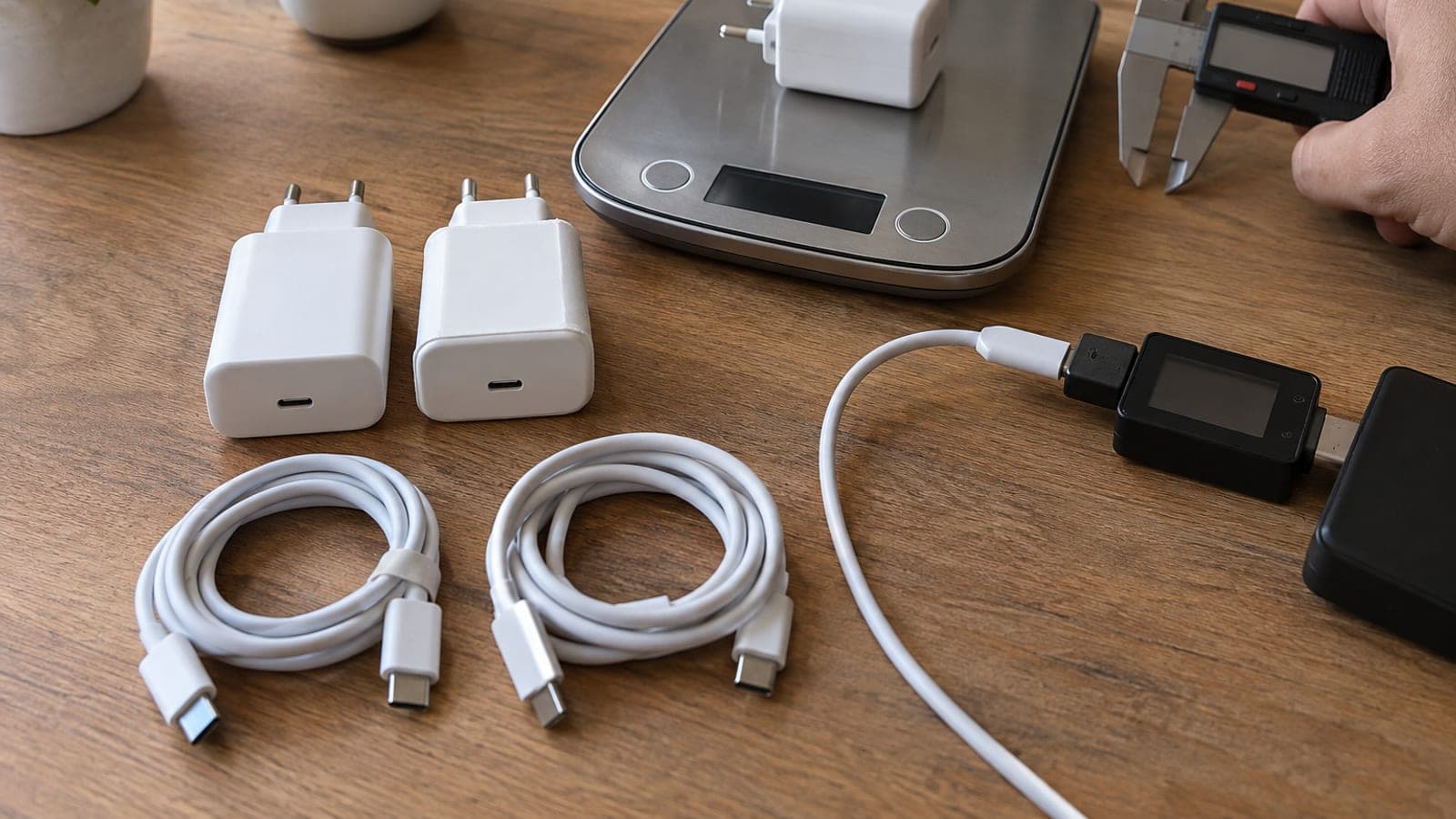
Zero the kitchen scale and weigh the adapter. A genuine 20W USB-C adapter is about 60 g and an older 5W unit about 40 g; the transformer, filtering and insulation material account for that mass. If something claiming the same wattage weighs 30-40 g, it is hollow inside and missing protection circuitry.
Measure and inspect the connector
Measure a Lightning connector with the caliper: the metal part is roughly 7.7 mm long and 1.5 mm thick, with 8 smooth, evenly spaced pins on each face. On USB-C the inner tongue must sit centered, with no plastic burrs or glue squeeze-out. Sniff the cable jacket up close; a sharp plastic or chemical smell points to cheap PVC.
Check the phone's warning
Plug the cable in. On iPhone, "This accessory may not be certified" or "This accessory is not supported" means there is no MFi license. Open Settings > Battery > Battery Health & Charging to confirm charging holds steady. On Samsung, with fast charging enabled under Settings > Battery and device care > Battery > More battery settings, the lock screen should read "Super fast charging".
Measure the real wattage
Insert the USB power meter between adapter and cable, wait two minutes with the phone at 20-50% charge, then read the value. A 20W adapter should show 9V at 1.8-2.2A; a 25-33W unit around 9V/2.7A or 11V/3A. If the label says 20W but you only see 5V/1A (5W), suspect both parts: swap in a genuine cable and measure again.
Run a heat and noise test
Leave the adapter in the outlet under load for 30 minutes. Warm is fine, but if you cannot hold it for 3-4 seconds (roughly above 60 °C), if it smells of hot plastic, or if you hear buzzing or clicking, unplug it immediately. The base of the cable connector should not get very hot either.
Verify the seller and return it
Enter the scratch-off verification code from the box on the manufacturer's verification page. On Apple accessories, look at the print quality of the "Made for iPhone" logo and the sharpness of the printed insert. If it is fake, contact the seller with your receipt and use your 14-day withdrawal right on distance sales; escalate to your consumer protection authority if that fails.
Tips
Watch out
The main risk with fake adapters is fire rather than shock: the insulation gap between the mains side and the phone side is often under 1 mm, which can let 220V reach the cable and the device. Do not leave a suspect adapter plugged in overnight, and never charge on a bed or sofa.
Frequently asked questions
+Does the iPhone "This accessory may not be certified" warning always mean the cable is fake?
No. A dirty, damp or worn connector can trigger it too. Clean the port with a dry brush and try another genuine cable; if the warning only comes back with one cable, that cable is uncertified.
+Can I check the real charging speed without a USB power meter?
Roughly, yes: note the battery percentage, charge for 15 minutes and look at the gain. Android battery info apps that display current also help, but neither is as reliable as a power meter.
+I bought it from an authorized seller and have a receipt. Can it still be fake?
Yes, because on marketplaces the listing seller and the shipper can be different parties. Keep the receipt, still check the label and the weight, and open a return request if it turns out to be counterfeit.
+Where can I report a product I know is counterfeit?
File a product safety report with your national consumer protection or market surveillance authority, and call the consumer helpline. If you want money back, take the claim to your local consumer arbitration or small claims body.
+Will a fake cable permanently damage my phone battery?
The cable itself usually does not harm the battery, but an adapter with unstable output can accelerate battery health loss and damage the charging circuit. The safest move is to stop using the suspect adapter.
Sources and verification
Last verified: September 15, 2026. tell us. Procedures and figures are based on the Turkish market: CE marking plus local importer details on the label, a 14-day right of withdrawal on distance sales, product safety reports at guvenlik.ticaret.gov.tr, the Alo 175 consumer helpline, and Consumer Arbitration Committee applications via e-Devlet. Names of authorities and price bands differ in other countries.
This content is for information only; for official procedures the relevant institution’s current announcements take precedence. Details: disclaimer.