How do you prepare an earthquake emergency bag?
AFAD's 72-hour rule turned into a per-person earthquake bag you can finish in a single day using things already at home.
Short answer
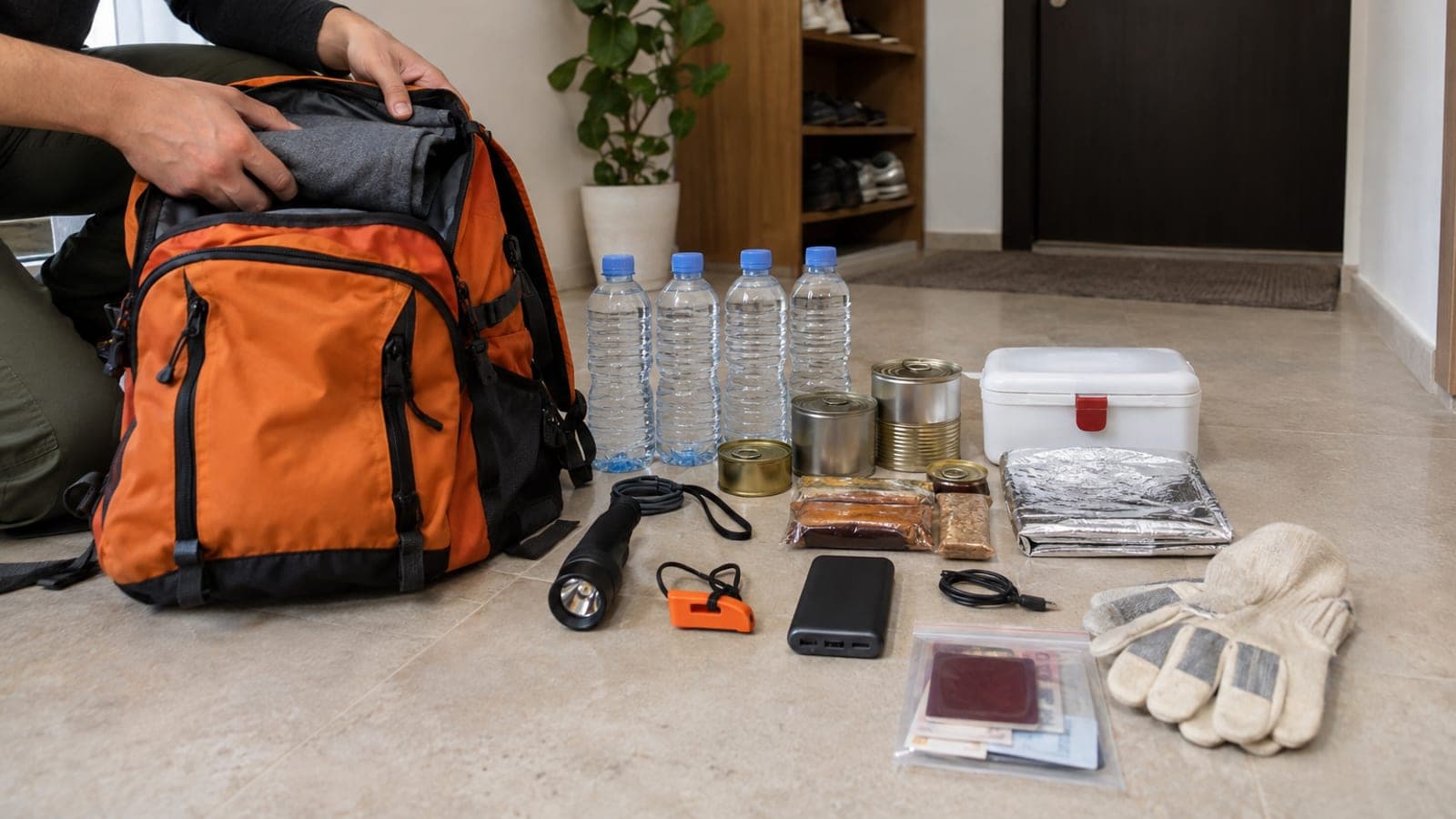
Pack one 30-45 litre waterproof backpack per person: 3 litres of drinking water, non-perishable food, personal medicines, a first aid kit, an LED torch, a whistle, a power bank, a thermal blanket, cash and document copies. Keep it in the hallway cupboard nearest the front door, cap the loaded weight at 8-10 kg, and refresh the contents every six months.
What you need
Step by step
Choose the bag and its spot
Set aside a 30-45 litre waterproof or tarpaulin backpack with two shoulder straps for every family member. Store it on the bottom shelf or a hook of the cupboard nearest the front door. Under the bed, the balcony cabinet, the basement and any lockable room are all wrong. Leave a pair of thick-soled shoes and a torch beside it.
Load 72 hours of water and food
Put in at least 3 litres of drinking water per person using 0.5 litre bottles; small bottles are easier to share and to carry. Add easy-open cans, crackers, dried fruit, nuts and 3-4 energy bars, aiming for around 2,000 kcal per day. Do not skip a lighter, a small can opener and disposable spoons.
Build the first aid and medicine box
Collect sterile gauze, an elastic bandage, plasters, scissors, surgical gloves, antiseptic solution and painkillers in a rigid box. Add a 7-day supply of any chronic medication. Log in to e-Nabız, open "Sağlık Kayıtlarım", download your medication and prescription list as a PDF and print it so nobody has to guess doses at a pharmacy or field hospital.
Prepare the light, radio and power set
Keep the LED torch, spare batteries, the 100 dB whistle and a battery or hand-crank radio together in a separate compartment. Charge the power bank to 100% and pack its cable, plus an old keypad phone stored charged and switched off. Leave candles and matches out: open flame is unsafe after a quake because of possible gas leaks.
Make the document and cash pouch
Log in to e-Devlet, search for "Nüfus Kayıt Örneği" and print the copy from "Belgelerim". Add photocopies of ID, driving licence, title deed or lease, your earthquake insurance policy and health reports to a zip-lock bag. Include 500-1,000 TL in 10, 20 and 50 TL notes; card readers and ATMs can stay down for days.
Add shelter and hygiene supplies
Pack the aluminised thermal blanket, two FFP2 masks, heavy work gloves, wet wipes, toilet paper, three 60 litre bin bags and feminine hygiene products. A bin bag works as a raincoat, a seat mat and a toilet liner all at once. If you have a baby, keep three days of formula, nappies and a bottle in a separate mesh pouch.
Fix a meeting point and assembly area
Find your neighbourhood assembly area by searching "toplanma alanı" on e-Devlet or on your municipality's emergency assembly map. Write the area name, two emergency numbers (112 and one out-of-town contact) and your family meeting point on a card in the front pocket. Put the same card in your child's school bag.
Weigh, label and set a reminder
Weigh the loaded bag on your bathroom scale: keep it under 8-10 kg for an adult and under 10% of body weight for a child, removing the heaviest cans if needed. Sew on a label with the owner's name, blood type and drug allergies. Set a yearly repeating phone reminder for 1 April and 1 October to check the bag.
Tips
Watch out
The two most common mistakes: storing the bag in a storeroom, basement or balcony cabinet, and leaving water and medicines unrefreshed for years. After a quake you may not reach that cupboard in the dark or through debris, and expired medication is useless. Keep the bag in the hallway, three steps from the door, and open it every six months.
Frequently asked questions
+How many days should an earthquake bag cover?
AFAD treats 72 hours as the critical window before outside help arrives, so the bag should hold at least three days of water, food and medicine. If you can, also keep a 7-day stock of water and canned food at home.
+Does every family member need a separate bag?
Yes. One large bag is too heavy to carry and stays with a single person if the family gets separated. Give each adult their own bag, and children a small one with water, an energy bar, a whistle and a torch.
+How much cash should I keep in the bag?
Keep 500-1,000 TL per person in 10, 20 and 50 TL notes. When power and internet go down, card readers and ATMs stop working and nobody has change for large notes.
+How often should I check the bag?
Open it every six months: refresh water and food, test batteries and the power bank charge, and review medication expiry dates. Update children's shoe and clothing sizes at each check too.
+Are candles or a lighter safe to keep in the bag?
A lighter stored on its own is fine, but never light candles after an earthquake because of possible gas leaks. Use a battery-powered LED torch or a head lamp for light instead.
Sources and verification
Last verified: 13 Eylül 2026. tell us. Written for Turkey: references AFAD guidance and the e-Devlet and e-Nabız government portals, with cash amounts in Turkish lira.
This content is for information only; for official procedures the relevant institution’s current announcements take precedence. Details: disclaimer.