How do you get a power of attorney at a Turkish notary?
Decide on the scope, bring valid photo ID, and walk out of the notary the same day with your power of attorney copy.
Short answer
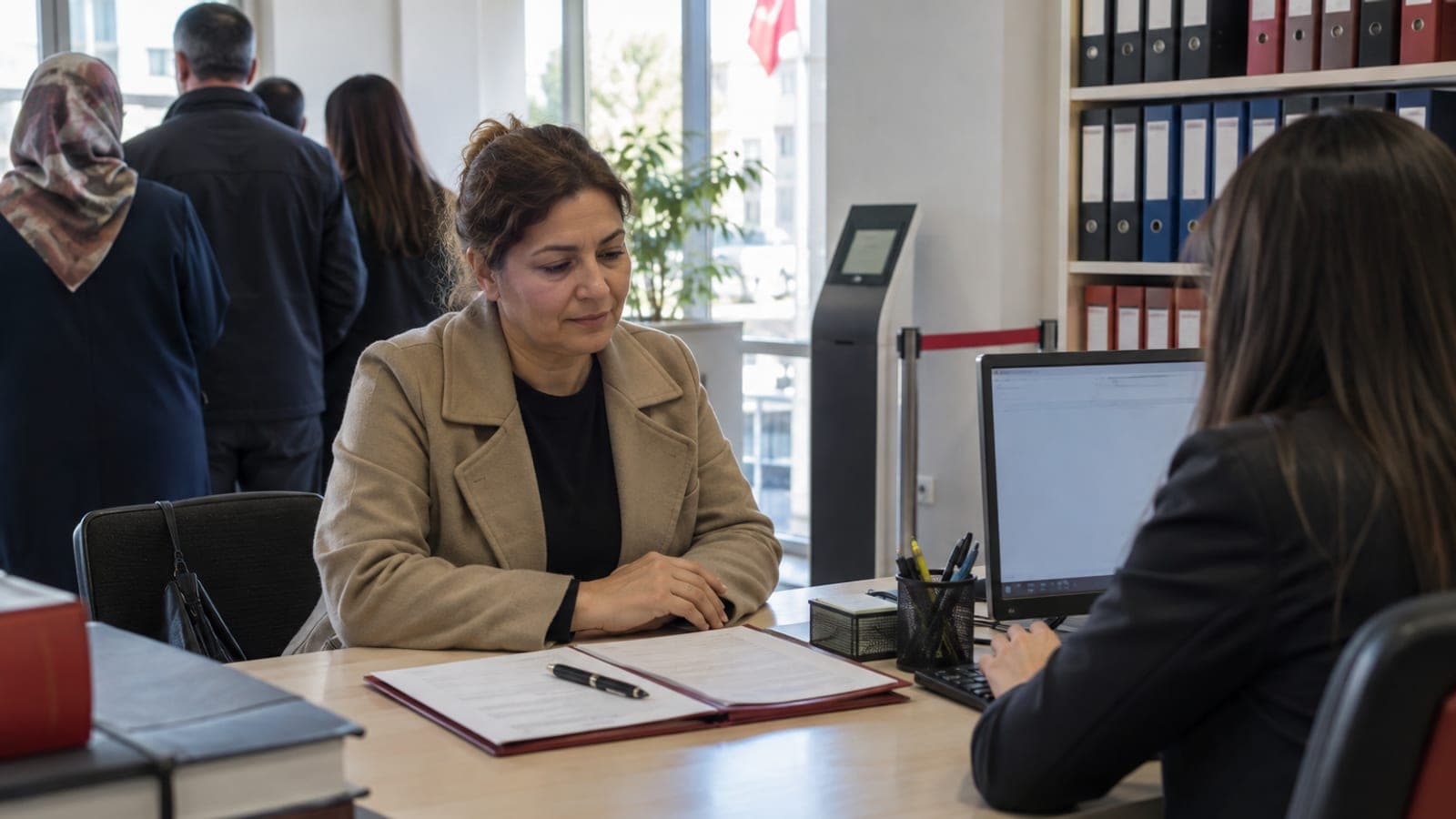
Settle the scope of the authority and collect the full identity details of the person you are appointing. Go to any notary in Turkey with valid photo ID, take a queue ticket and ask to have a power of attorney (vekaletname) drawn up. The clerk drafts the text, you read and approve it, then sign in front of the notary. Pay the fee and collect the certified copy plus the receipt.
What you need
Step by step
Choose the type of authority
A power of attorney is either general or special. A general one grants broad authority, while a special one covers only the specific matter you name. Title deed transfers, vehicle sales, divorce cases and company filings need explicit authority clauses, so decide which transaction you need before you go.
Gather the details and documents
Write down the agent's civil registry details in full, since the notary types the text from exactly that information. If an asset is involved, bring the title deed, vehicle registration or case file details. For property and vehicle powers of attorney the notary usually asks for a passport photo, so carry one.
Go to a notary and take a ticket
There is no territorial restriction for a power of attorney, so any notary office in Turkey will do. Take a ticket from the queue machine at the entrance; some offices run separate lines for "Vekalet" and "Diger islemler". Early morning slots are the quickest at busy offices.
Explain your request to the clerk
When your number comes up, say you want a power of attorney drawn up and state the type and the transaction it covers. The clerk takes your ID and pulls your details from the Notary Information System, then drafts the text. Describe the transaction concretely so no authority clause is left out.
Read the draft and sign
The clerk hands you the draft or shows it on screen. Check the agent's identity details, the authority clauses and your own information line by line, and ask for corrections before you sign. Then sign the document in the presence of the notary.
Pay the fee and collect the copy
After signing you are directed to the cashier, where card or cash is accepted. In return you receive the certified copy of the power of attorney and the payment receipt. Your agent cannot act until you get that copy to them.
Confirm the authority is accepted
Have your agent check with the institution handling the matter, whether that is the land registry office, a bank or a court clerk, that the authority clauses are sufficient. If something is missing, you must return to a notary for a supplementary or corrected document. You can view your registered powers of attorney under the notary services section of e-Devlet.
Tips
Watch out
A general power of attorney grants very broad authority: the person you appoint can sell your property, take on debt in your name or move money in your bank accounts. Give it only to someone you trust and keep the scope limited to what you need. Once the need has passed, do not put off cancelling it with a revocation deed.
Frequently asked questions
+Which notary do I have to use?
There is no jurisdictional limit for drawing up a power of attorney, so you can use any notary office in Turkey. It does not have to be the district where you live.
+Does the person I am appointing need to be at the notary too?
No, only the person granting the authority signs. It is enough to provide the agent's identity details in full; they do not need to attend.
+Does a power of attorney expire?
Unless a time limit is written into the text, it stays valid until you revoke it with a revocation deed. Some institutions ask for a recently dated copy, so check with the relevant office.
+I am abroad. Can I still get one?
Yes. A Turkish consulate in the country you are in can draw up a power of attorney as a notarial act. Confirm appointment and document requirements on that consulate's own page.
+How do I cancel a power of attorney?
Go to any notary and have a revocation deed (azilname) drawn up. The notary records the revocation, and it is wise to notify the agent and the institution involved as well.
Sources and verification
Official pages for this process
Published: September 12, 2026. tell us. Procedure applies to notary offices in Turkey; Turkish document names are kept in brackets for use at the counter.
This content is for information only; for official procedures the relevant institution’s current announcements take precedence. Details: disclaimer.