How do you measure fever and blood pressure correctly at home?
Preparation, measurement and record-keeping steps for reliable readings from a home thermometer and blood pressure monitor.
Short answer
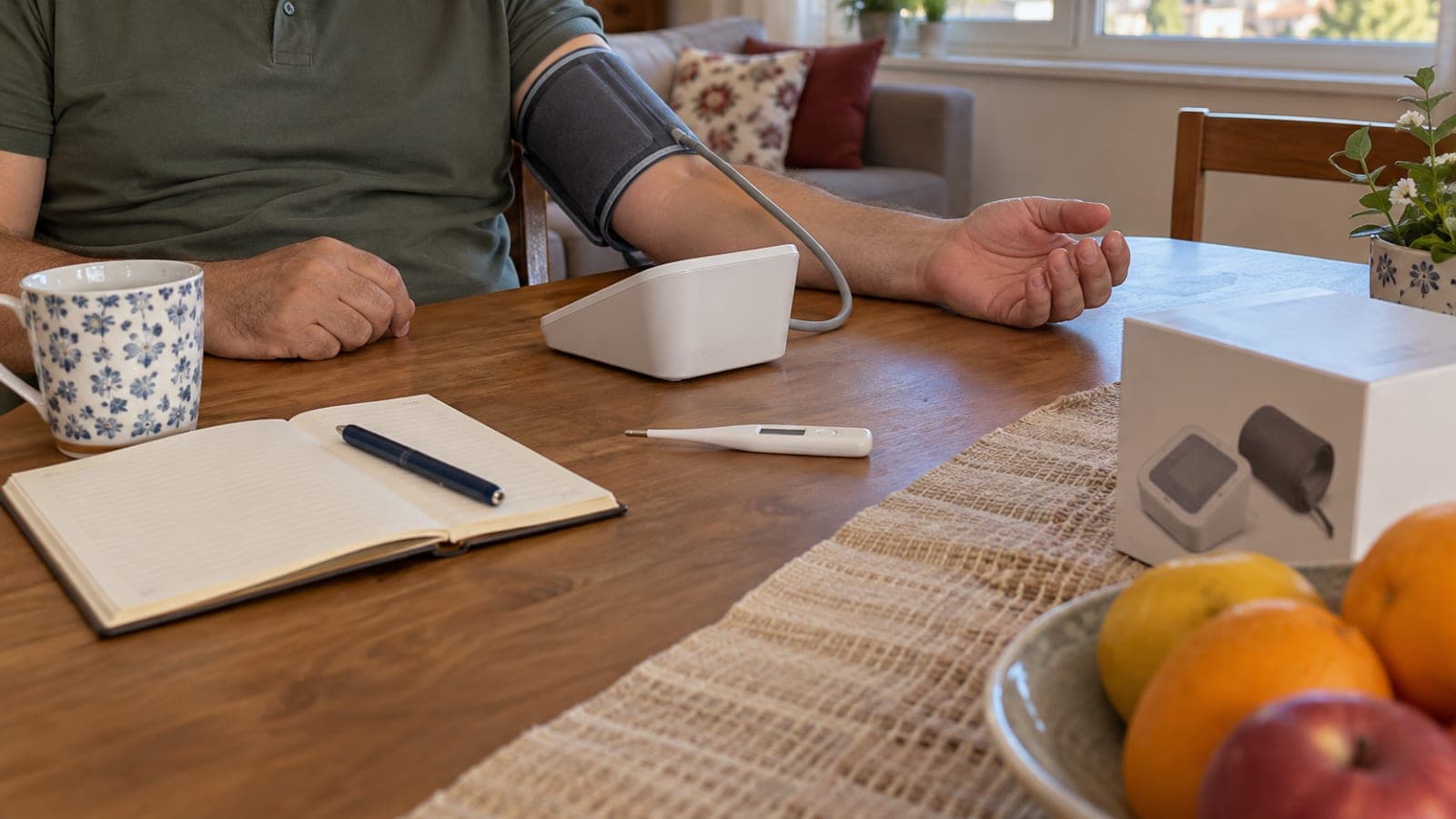
Sit quietly and rest for a few minutes first. Measure blood pressure on the upper arm with the cuff at heart level, back supported and feet flat on the floor, then repeat after a short pause in the same sitting. Take temperature from the body site and mode stated in your device manual. Log the results in your health app or a notebook and let your family doctor interpret them.
What you need
Step by step
Settle your body before measuring
Avoid tea, coffee, cigarettes and strenuous movement beforehand, and empty your bladder. Then sit in a quiet room on a chair with back support and rest without talking. A full bladder, fresh coffee or climbing stairs all push readings up, so do not skip the waiting part.
Fit the cuff correctly
Bare your arm of thick clothing and wrap the cuff around the upper arm, just above the elbow crease. Line the artery marker on the cuff (usually an arrow or the word "ARTERY") up with the inner side of your elbow. Leave enough room for one finger between cuff and arm. Rest the arm on the table so the cuff sits at heart level; a low arm raises the reading.
Take the reading and repeat it
If the monitor has more than one user memory, pick your own profile with the "USER" button, then press "START/STOP" and wait silently until the measurement ends. Without removing the cuff, pause briefly and repeat. On your first session measure both arms, then always use the arm that reads higher.
Measure temperature at the right site and mode
Confirm in the manual which site your thermometer is built for: underarm, mouth, ear or forehead. On forehead and ear devices use the mode button to select "Body"; "Surface" or "Object" mode reads surface heat and misleads you. For an underarm reading, dry the skin, press the tip flat against it, hold the arm to your body and wait for the beep.
Read the memory and write it down
As soon as the reading finishes, note the upper value, lower value and pulse, or the temperature. To check later, open the stored readings with the "M" or "MEM" button. Also record which arm you used, the time of day, and any medication you took. Without those details the log cannot be interpreted by a doctor.
Enter the records in your health app
Sign in to your national health record app with your e-government password and use the personal measurement section to enter blood pressure and body temperature. Fill the fields in the same order as your notebook and save. If you do not use the app, keep the same information as a table on paper so you arrive at the appointment with a one-page summary.
Have the device accuracy checked
When the battery weakens or readings disagree with each other, take the device to an authorised service point or the medical supply shop you bought it from. Replace a frayed cuff or cracked tube with the same model's cuff. To have the numbers interpreted, book a family medicine appointment and bring the device and your logbook.
Tips
Watch out
Never start, stop or change the dose of a medicine on your own based on a single home reading. Measuring in surface mode on forehead and ear thermometers can make a fever look lower than it is. With chest pain, severe headache, confusion, shortness of breath, seizures or a persistent high fever, do not keep repeating measurements; get emergency medical care.
Frequently asked questions
+Which arm should I use for blood pressure?
Measure both arms the first time, then keep using the arm that gives the higher value. Always note in your log which arm you used.
+Can I use a mercury thermometer?
Mercury thermometers are not recommended because a break releases toxic mercury. Use a digital one, and take any mercury device to a hazardous waste collection point instead of the bin.
+My readings differ every time. Is the device faulty?
Blood pressure naturally fluctuates through the day, so small differences are normal. If back-to-back readings in one sitting are far apart, check the cuff placement, and have the device serviced if that does not help.
+Will a doctor accept the records I keep at home?
Records kept regularly are a useful source of data during an examination. Note the time, the arm and your medications, then enter them in your health app or print them out to take along.
+When should the cuff be replaced?
Replace it when the fabric goes slack, the hook-and-loop strip stops holding, or the tube cracks. Buy a spare that matches your device brand and your arm circumference.
Sources and verification
Last verified: 13 Eylül 2026. tell us.
This content is for information only; for official procedures the relevant institution’s current announcements take precedence. Details: disclaimer.