How do you put together a home first aid kit?
Buy the supplies in a single pharmacy trip and turn a hard 30x20x10 cm case into a ready-to-use kit in about 1.5 hours.
Short answer
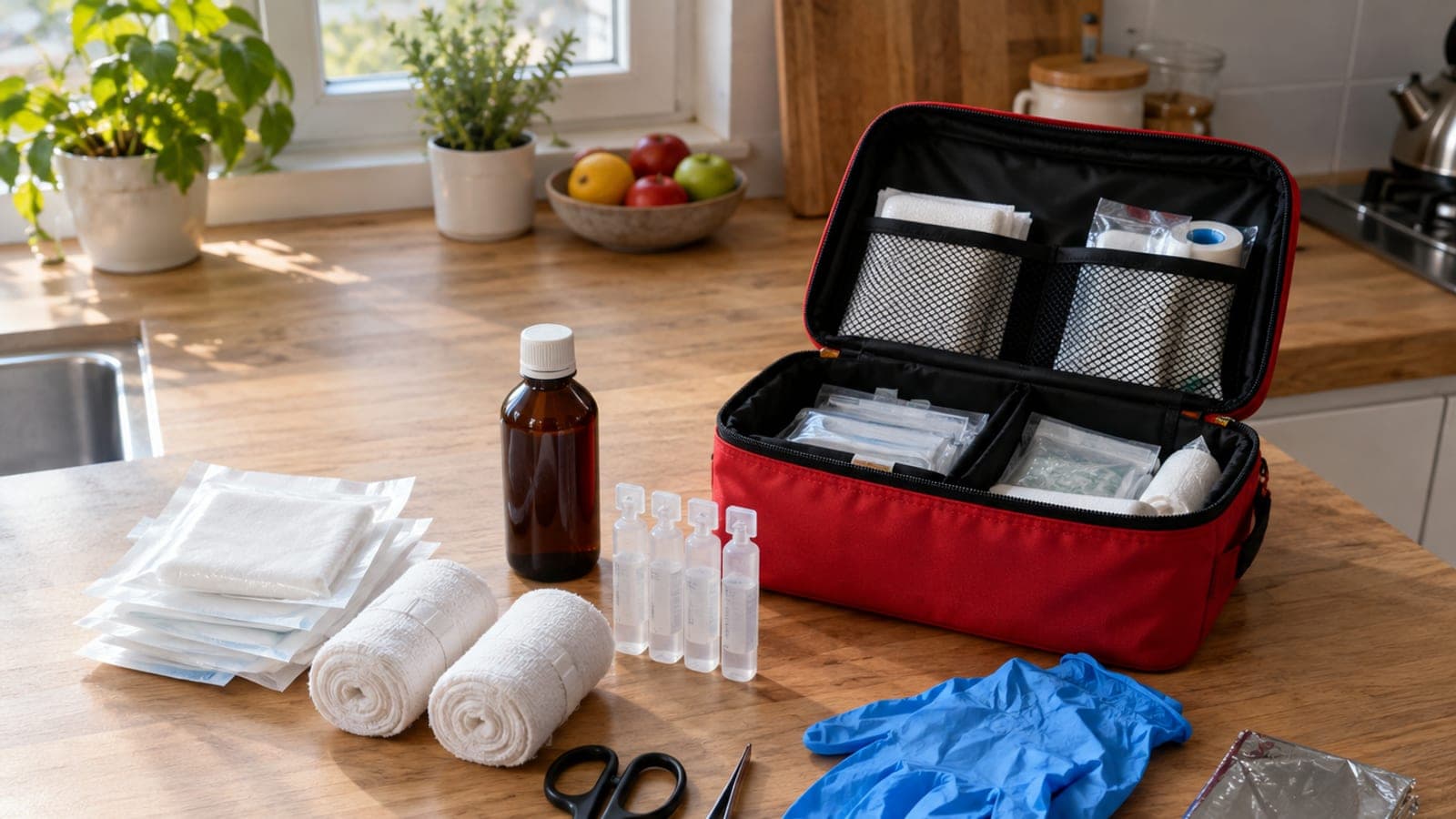
Get a hard-shell case about 30x20x10 cm. Stock it with 10x10 cm sterile gauze (10), 5 cm and 10 cm roller bandages, a triangular bandage, tape, 5 ml saline vials, 10% povidone-iodine, scissors, tweezers, 5 pairs of nitrile gloves, a digital thermometer, instant cold packs and 500 mg paracetamol. Put the emergency info card on top and set a calendar reminder to check it every 6 months.
What you need
Step by step
Pick the case and divide it up
Use a hard-shell case with a carry handle, roughly 30x20x10 cm, or a latching plastic box. Split the inside into four clear zip-lock bags: wound care, medicines, tools, protection. Label each bag with a thick marker so you can pull the right one in an emergency without digging through everything.
Complete the wound care supplies
From the pharmacy, get 10x10 cm sterile gauze (10 pieces), 5 cm and 10 cm roller bandages, one triangular bandage, 100 g absorbent cotton, assorted adhesive bandages and paper tape. Add at least 10 single-use 5 ml saline vials for irrigation and 100 ml of 10% povidone-iodine for dirty wounds. Leave sterile items sealed in their original packaging.
Set up the medicine section
Keep only basic over-the-counter medicines: 500 mg paracetamol tablets, one antihistamine, 2 sachets of oral rehydration salts and burn gel. Add one spare dose of the prescription medicines your household uses daily, such as an asthma inhaler, an adrenaline auto-injector or insulin. Never stockpile antibiotics just in case, and fold each package insert next to its box.
Add measuring, protection and tools
Pack a digital thermometer, stainless steel scissors, tweezers, 6 safety pins, and a flashlight with spare batteries. For protection add 5 pairs of M/L nitrile gloves, 5 surgical masks and a foil emergency blanket. Include 2 instant cold packs for swelling and shock; they need no refrigeration, so they can sit in the case.
Write the emergency information card
On an A5 sheet, list each household member's name, birth year, blood type, chronic conditions, current medicines and drug allergies. On the bottom line add the emergency number, your family doctor's name and clinic phone, the nearest hospital and one close relative. Slip the card into a clear bag and tape it inside the lid.
Fill in the medical data on your phone
On iPhone, open the Health app, tap your profile icon at the top right, enter allergies, medications and blood type under "Medical ID", then turn on "Show When Locked". On Android, complete Settings > Safety & emergency > Medical info and Emergency contacts. Responders can then read the details even when you cannot speak.
Choose a spot and tell everyone
Store the case below 25 °C, away from damp and sunlight: a hallway closet or a high kitchen shelf rather than the bathroom. Pick a height an adult can reach in 10 seconds but a small child cannot. Show everyone in the household where it is, and keep a mini set with scissors, gauze and gloves in the car.
Set a check reminder every 6 months
Create a recurring calendar event called "First aid kit check" that repeats every 6 months. At each check, pull out expired items, replace what you used, and note the nearest expiry date on the back of the card. Do not bin expired medicines; hand them to a pharmacy's medicine waste bin.
Tips
Watch out
With serious bleeding, loss of consciousness, chest pain, stroke signs or large burns, do not reach for the kit first; call emergency services. Never give aspirin (acetylsalicylic acid) to children because of the risk of Reye's syndrome. Pouring tincture of iodine, alcohol or hydrogen peroxide on a wound slows healing; use saline alone on clean wounds.
Frequently asked questions
+Is a pre-packed first aid kit enough?
Usually not. The gauze and bandages in ready-made kits barely cover one injury, so use the kit as a base and add gauze, saline, gloves and a thermometer yourself.
+Can I keep prescription medicines in the kit?
Yes, you can keep one spare dose of an inhaler, adrenaline auto-injector or heart medicine your household uses regularly. Store the box with its package insert and check the expiry date at every review.
+Why is the bathroom a bad place for the kit?
Humidity and temperature swings in the bathroom ruin tape adhesive, sterile packaging and tablets. A dry hallway or kitchen cabinet that stays below 25 °C is a better choice.
+How do I dispose of expired medicines and supplies?
Do not throw medicines in the trash or down the sink; drop them in a pharmacy's medicine take-back bin. Expired gauze and bandages no longer count as sterile, so reuse them as cleaning cloths.
+Do I need a separate kit for the car?
Yes. Traffic rules in many countries require a first aid kit in the vehicle, and keeping a dedicated set in the car is more practical than carrying the home kit back and forth.
Sources and verification
Last verified: 13 Eylül 2026. tell us. Adapted from a Turkish guide: the emergency number there is 112, on-call pharmacy listings come from the Turkish Pharmacists' Association, first aid training is offered by the Turkish Red Crescent, and carrying a car kit is required by the Highway Traffic Regulation. Check your own country's emergency number and rules.
This content is for information only; for official procedures the relevant institution’s current announcements take precedence. Details: disclaimer.