How do you make yogurt at home?
A measured method for thick, set homemade yogurt using 1 litre of milk, 1 tablespoon of starter and a thermometer.
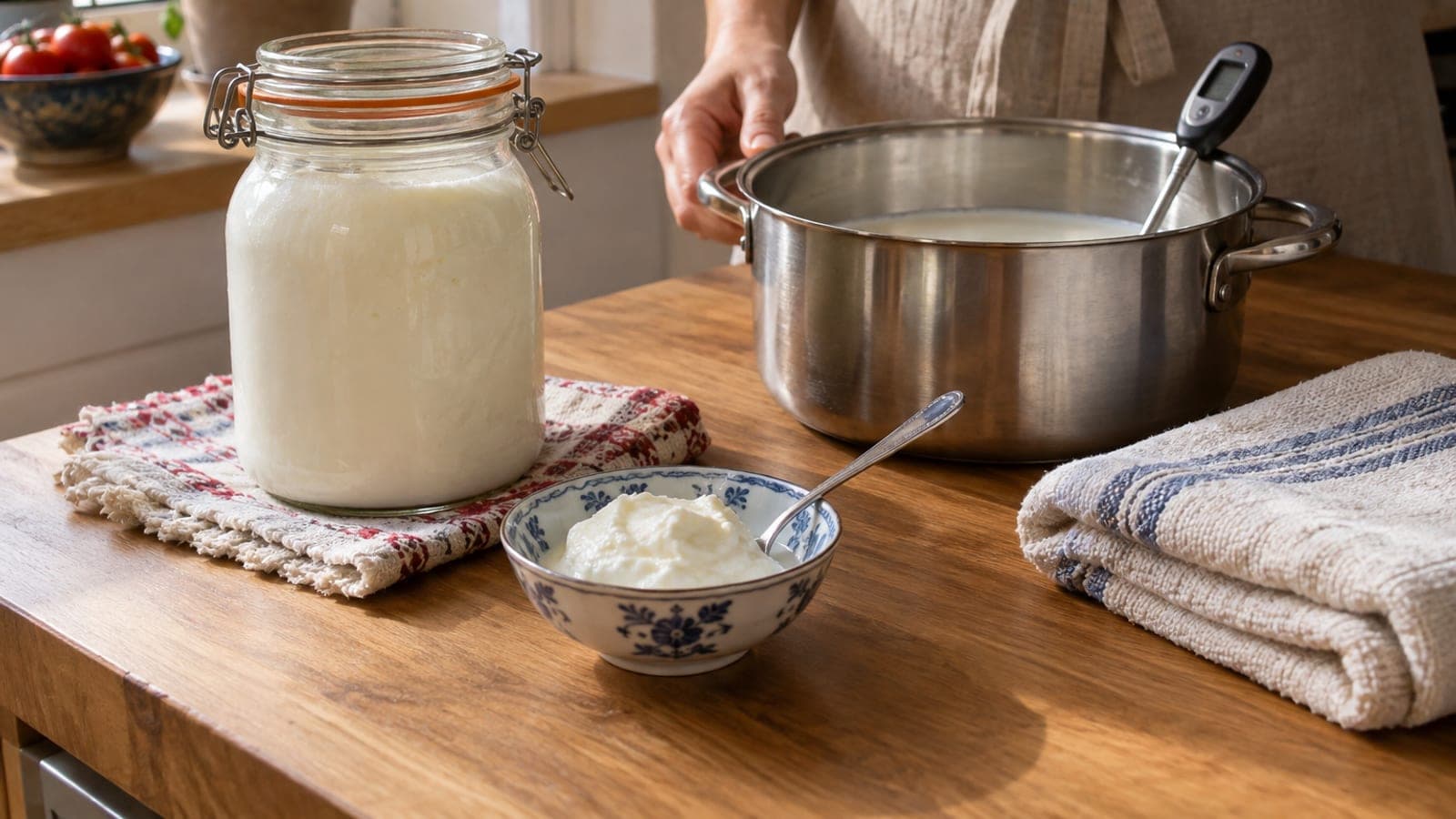
Short answer
Hold 1 litre of whole milk at 85 °C for 10 minutes, then cool it to 43-45 °C. Mash 1 tablespoon (15 g) of live-culture plain yogurt with a ladleful of the warm milk and stir it through the whole pot. Cover the container, wrap it in a blanket or use your oven's 45 °C yogurt setting, and leave it undisturbed for 5-6 hours. Chill for at least 4 hours before serving.
What you need
Step by step
Prepare the milk and starter
Pour 1 litre of whole fresh milk into the heavy-bottomed pot. Take the tablespoon of yogurt you will use as starter out of the fridge and leave it on the counter for 20-30 minutes to reach room temperature. Cold starter meeting hot milk gets shocked, and the culture works slowly after that.
Hold the milk at 85 °C for 10 minutes
Set the burner to medium, stir occasionally, bring the milk to 85 °C and keep it there for 10 minutes. This step unfolds the milk proteins so the yogurt sets thicker and holds a spoon. You do not need to boil it; if it boils over, the fat balance suffers.
Cool the milk to 43-45 °C
Take the pot off the heat, leave the lid slightly ajar and let it cool for 30-40 minutes. It is ready when the thermometer reads 43-45 °C. Without a thermometer, the temperature is about right if you can hold your little finger in it for 10 seconds. Above 50 °C the culture dies; below 40 °C fermentation stalls.
Mash the starter separately, then stir it in
Put the tablespoon of yogurt in a small bowl, add half a ladle of the warm milk and whisk until no lumps remain. Pour this mixture into the whole pot and stir in one direction with the spatula for 15-20 seconds. Dropping the starter straight into the pot makes it settle at the bottom and the yogurt sets unevenly.
Wrap the container and wait 5-6 hours at a steady temperature
Transfer the mixture to the glass jar or steel container and close the lid. Wrap it in a blanket and place it in a draught-free corner of the kitchen. If your oven has a yogurt setting, use 45 °C; if not, just switch on the oven light and keep the door closed. Leave it for 5-6 hours without shaking or opening it.
Check the set and move it to the fridge
After 5 hours, tilt the container gently; if the yogurt slides as one block, it has set. If it still looks watery, give it another hour. Move the set yogurt to the fridge without jostling it and rest it for at least 4 hours, ideally overnight. Cold firms up the texture and stops the souring.
Set aside your next starter
Once the yogurt is cold, take 2 tablespoons from the top, put them in a small jar and keep it in the fridge. Use this starter within 7 days. Carrying the same culture over more than 5-6 times weakens it, so buy fresh plain yogurt when the texture starts to fall off.
Tips
Watch out
If you use raw or unpasteurised farm milk, boil it and hold it there for 5 minutes before culturing; unpasteurised milk carries a risk of brucella and listeria. The most common mistake is adding the starter to milk hotter than 50 °C: the bacteria die, the milk never sets, and it only sours and separates.
Frequently asked questions
+My yogurt did not set and stayed like milk. What can I do?
The temperature was either too high or too low. Reheat the mixture to 43 °C and culture it again with a fresh tablespoon of yogurt; if that fails, use the milk in rice or cake batter.
+Can you make yogurt with UHT (long-life) milk?
Yes, and it is convenient; UHT milk is already heat-treated, so you can warm it straight to 43-45 °C and add the starter. The set comes out slightly softer than with fresh milk.
+Is the liquid pooling on top of the yogurt normal?
Yes, that liquid is whey and it is rich in protein. You can stir it back in or spoon it off and pour it away for a firmer texture.
+How long does homemade yogurt keep in the fridge?
Kept covered on a 4 °C shelf it lasts 7-10 days. After that it turns more sour; do not eat it if the smell is sharp or you see mould.
+Can I open the container to check on it while it ferments?
Do not open or shake it during the first 5 hours. Heat loss and vibration break the curd, leaving the yogurt watery and grainy.
Sources and verification
Published: September 12, 2026. tell us. Temperatures are in Celsius and quantities are metric; 1 litre is about 4 cups and 15 g of starter is about 1 tablespoon.
This content is for information only; for official procedures the relevant institution’s current announcements take precedence. Details: disclaimer.